
Transform Your Kitchen with Manufactured Stone Veneer
Share
Originally posted April 25 2025, updated August 11 2026.
Manufactured stone veneer is an excellent way to add natural texture, warmth, and architectural character to a kitchen. It can be used on kitchen islands, accent walls, range hood surrounds, backsplashes, and other features. With the right installation, substrate preparation, and a breathable penetrating sealer where appropriate, manufactured stone veneer can provide a durable and attractive kitchen finish.
When designing or renovating a kitchen, countertops, cabinets, flooring, and appliances usually receive most of the attention. But the walls and architectural features can have just as much impact on the overall design. Manufactured stone veneer offers a way to add texture, dimension, and the appearance of natural stone without the weight and expense associated with full-thickness stone.
From a dramatic kitchen island to a rustic range hood surround, manufactured stone veneer can transform an otherwise ordinary feature into a focal point. Its variety of profiles, colors, shapes, and textures makes it suitable for everything from traditional farmhouse kitchens to contemporary and industrial spaces.
Because kitchens are exposed to moisture, grease, food splashes, and everyday wear, choosing the right application and installing the veneer correctly are important. Understanding where manufactured stone veneer works best and how to care for it can help you create a kitchen feature that looks great for years.
What is Manufactured Stone Veneer?
Manufactured stone veneer is a cement-based architectural product designed to replicate the appearance of natural stone. It is produced using materials such as Portland cement, lightweight aggregates, and mineral-based pigments, which are molded and textured to create a variety of realistic stone profiles.
Unlike full-thickness natural stone, manufactured stone veneer is designed as a non-structural facing material. Its lighter weight makes it particularly useful for decorative applications where installing full-depth masonry would be impractical.
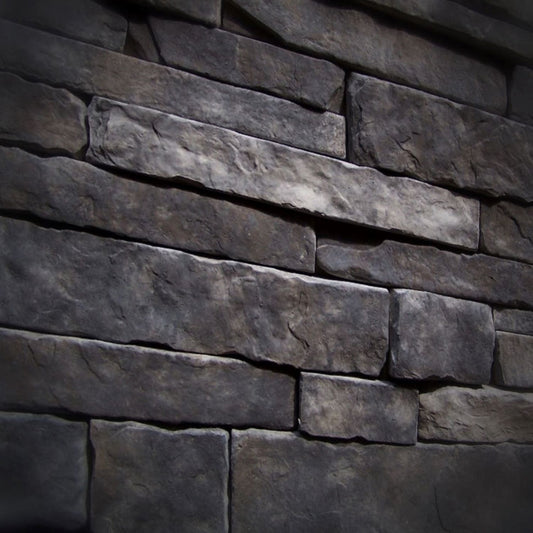
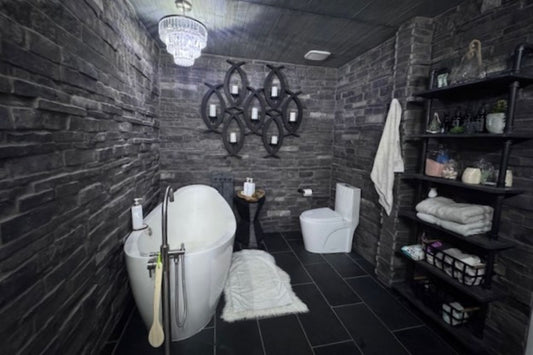
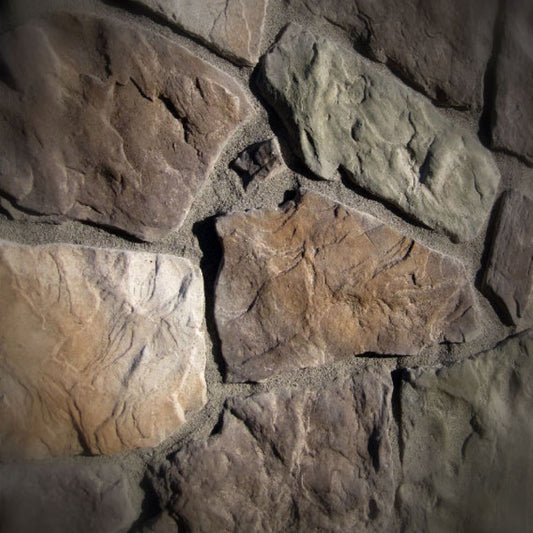
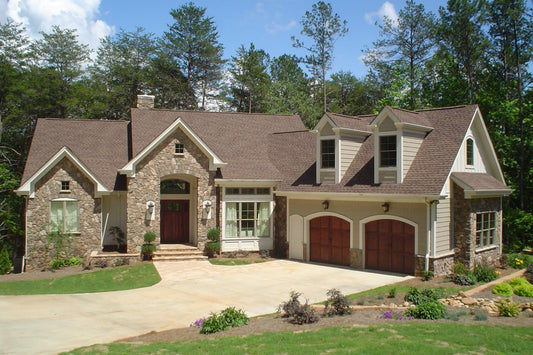
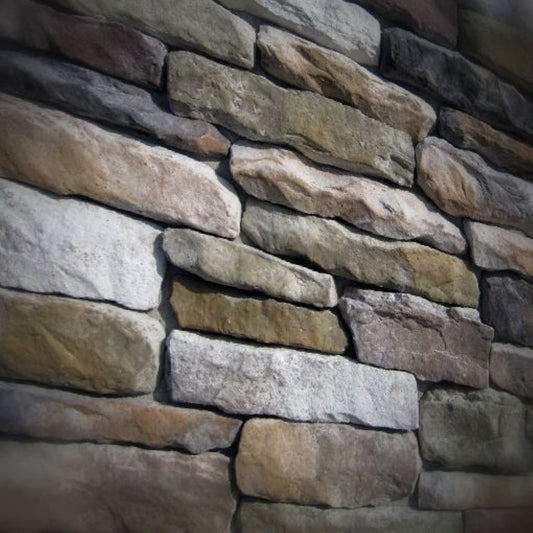
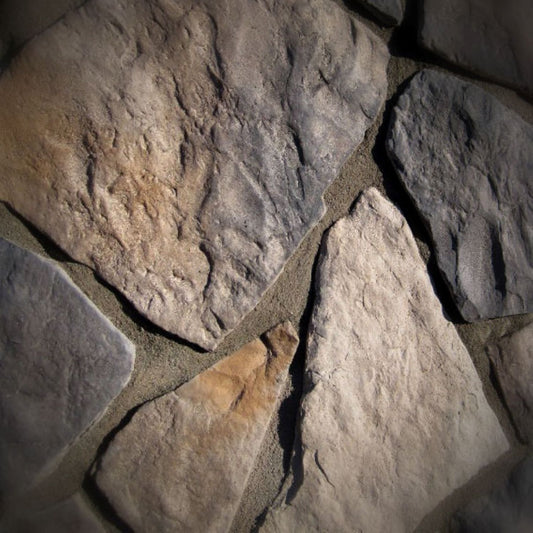
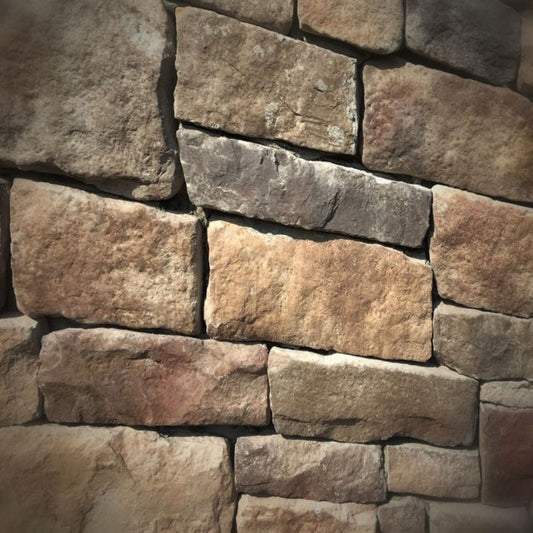
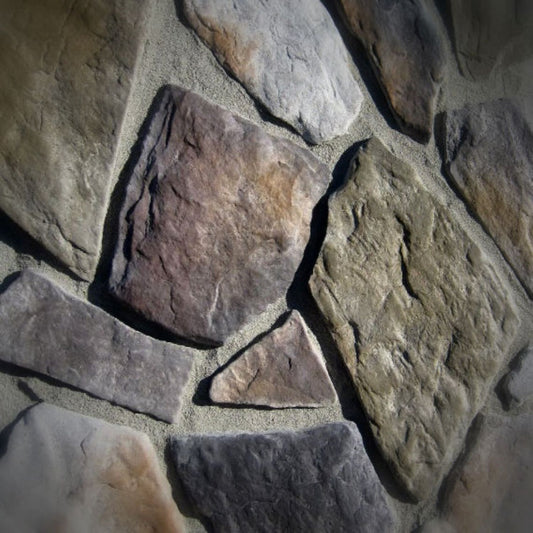
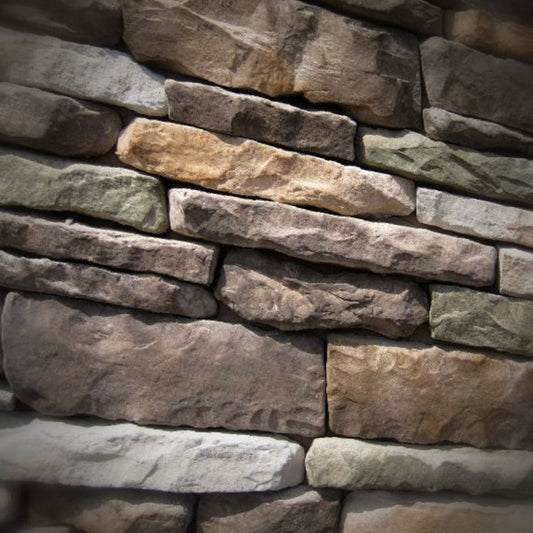
Manufactured stone veneer is available in a wide range of styles, including ledgestone, stacked stone, fieldstone, limestone, and other architectural profiles. Depending on the style selected, it can create anything from a clean, modern appearance to a highly irregular, rustic look.
For kitchen renovations, this versatility allows homeowners to use stone selectively rather than covering an entire room.
Why Use Manufactured Stone Veneer in a Kitchen?
One of the biggest advantages of manufactured stone veneer is its ability to introduce natural-looking texture into a space filled with smooth surfaces. Modern kitchens often combine cabinetry, countertops, stainless steel appliances, glass, and painted walls. Stone veneer provides visual contrast and can make the room feel warmer and more substantial.
Another practical advantage is its lighter weight compared with full-thickness natural stone. This makes manufactured stone veneer a versatile option for interior architectural features such as kitchen islands, accent walls, and range hood surrounds, provided the underlying structure and substrate are properly prepared for the installation.
The right stone profile can also complement almost any kitchen design. Stack stone profiles can work well with contemporary cabinetry, while irregular fieldstone can enhance rustic or farmhouse designs. Ashlar-style limestone can create a more refined architectural appearance, while ledgestone profiles can provide a stronger textured effect.
Manufactured stone veneer can also create a focal point without requiring a complete kitchen redesign. Adding veneer to an island, range hood, or feature wall can dramatically change the character of the room while leaving the existing cabinets and countertops intact.
Manufactured Stone Veneer Kitchen Island Ideas
Kitchen islands and breakfast bars are some of the most popular places to incorporate manufactured stone veneer. Because the island often sits at the visual center of an open-concept kitchen, wrapping the exterior with stone can give it the appearance of a substantial architectural feature.
A full stone veneer island can create a traditional or rustic focal point, while a more linear stone profile can complement modern cabinetry. The stone can also be combined with a contrasting countertop to create additional visual interest.
When installing veneer around an island, consider the height and proportions of the island as well as the surrounding finishes. A heavily textured stone may work beautifully on a large island but could overwhelm a smaller space. Selecting a profile that is appropriately scaled to the kitchen helps maintain visual balance.
The stone should also be installed according to the manufacturer's requirements for the specific substrate and application. Manufactured stone veneer is decorative rather than structural, so the island's underlying construction must provide the necessary support and stability.
Stone veneer should not be relied upon to support a countertop, cabinets, shelving, or other structural components. Those elements should be properly supported and anchored to the underlying structure.
Stone Veneer Accent Walls in Kitchens
An accent wall can be one of the easiest ways to introduce manufactured stone veneer without making the kitchen feel visually crowded.
A stone wall behind a dining area, breakfast nook, or other prominent section of the kitchen can provide a strong architectural backdrop. In an open-concept home, the stone can also help visually define the kitchen and dining areas without requiring a physical wall.
The amount of stone you use can be just as important as the profile you choose. Covering an entire wall creates a dramatic statement, while a smaller section can provide texture without dominating the room.
Consider how the stone interacts with nearby cabinets, flooring, countertops, and lighting. Natural-looking stone can change considerably throughout the day as light moves across its textured surface, which can make it especially effective on a feature wall.
Kitchen lighting can further emphasize the texture and color variation of manufactured stone veneer. Under-cabinet lighting, pendant lights, recessed lighting, and accent lighting can create shadows across the surface and add depth to the installation. Before finalizing the placement, consider how both natural and artificial light will interact with the stone throughout the day.
Can Manufactured Stone Veneer Be Used as a Kitchen Backsplash?
Manufactured stone veneer can be used in some kitchen backsplash applications, but the specific location and exposure should be considered carefully.
A backsplash directly behind a sink or food preparation area can experience frequent exposure to water, oils, sauces, and cleaning products. The texture and irregular surfaces of some stone profiles can also make cleaning more difficult than a smooth tile surface.
For these reasons, manufactured stone veneer is often better suited to decorative backsplash areas with less direct exposure to heavy splashing. If veneer is used in a kitchen backsplash, follow the product manufacturer's installation and sealing recommendations carefully.
A penetrating, breathable sealer may help protect the finished veneer from staining and make routine cleaning easier, but the appropriate sealer depends on the specific product and application. Avoid assuming that every stone veneer or sealer should be treated identically.
Because manufactured stone veneer can have a textured or irregular surface, grease and food residue may collect in recessed areas more readily than on a smooth backsplash. This makes location, profile selection, and prompt cleanup particularly important in kitchen applications.
Manufactured Stone Veneer vs. Tile Backsplashes
Tile remains a popular kitchen backsplash material because it provides a smooth, relatively easy-to-clean surface and is available in countless colors, patterns, shapes, and finishes. Manufactured stone veneer offers a different design approach, with deeper texture, dimensional variation, and the appearance of natural masonry.
For homeowners who want a more architectural or organic appearance, stone veneer can create a stronger visual focal point than a conventional flat backsplash. Its dimensional surface can introduce warmth and character while complementing cabinetry, countertops, and other kitchen finishes.
However, highly textured stone can require more attention when cleaning, particularly in areas exposed to grease and food splashes. Tile may be a better choice when a completely smooth and easily wiped surface is the priority. The best material depends on the location, desired appearance, exposure, and amount of maintenance you are comfortable with.
Stone Veneer Around Range Hoods
A range hood or chimney-style hood can become a major architectural focal point when finished with manufactured stone veneer.
Stone surrounding a range hood can give a kitchen a built-in, custom appearance and works particularly well with farmhouse, rustic, Mediterranean, and traditional designs. A more refined stone profile can also complement contemporary kitchens when paired with simple cabinetry and clean lines.
Heat exposure requires special attention, however. Manufactured stone veneer itself may be non-combustible, but the materials behind the veneer, adhesives, framing, insulation, and other components may have specific temperature limitations.
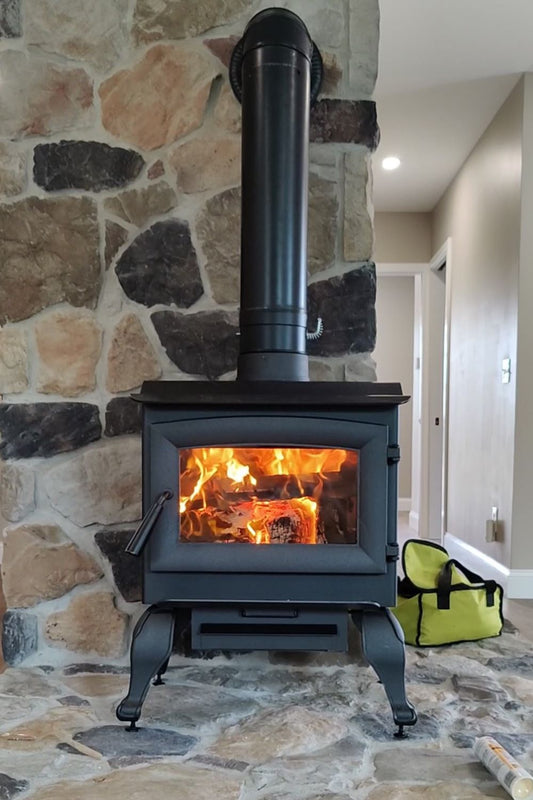
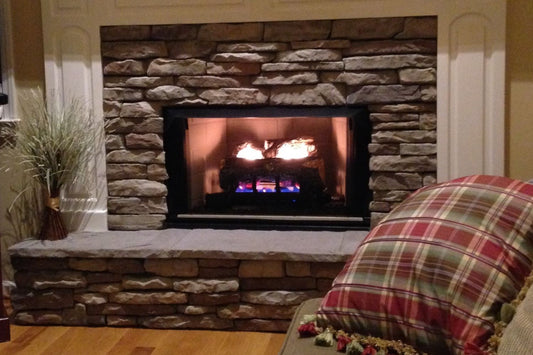
Stone veneer should never be installed inside a firebox or directly in a location where it will be exposed to flame unless the entire assembly has been specifically designed and approved for that application. Around a range hood or cooking appliance, follow applicable building codes, appliance clearances, and manufacturer requirements.
How to Install Manufactured Stone Veneer in a Kitchen
Proper installation is essential for both appearance and long-term performance. The installation method depends on the substrate and the specific location where the veneer will be installed.
For applications over substrates such as drywall, cement board, brick, stucco, or other surfaces, proper substrate preparation is critical. Metal lath and a scratch coat may be required depending on the substrate and installation conditions.
Manufactured stone veneer should be installed using the mortar and methods specified by the manufacturer. Type S mortar is recommended. Construction adhesives, mastic, and thin-set are not recommended and can affect warranty coverage.
The surface should also be planned carefully before installation begins. Corners, transitions, outlets, cabinets, countertops, and other features should be considered so the stone pattern looks intentional.
Although some smaller interior projects may be suitable for experienced DIY installers, manufactured stone veneer installation is different from installing conventional tile. Proper substrate preparation, mortar selection, stone placement, and adherence to manufacturer instructions are important for a successful installation. For larger or more complex kitchen features, professional installation may be appropriate.
Because manufactured stone veneer is not structural, it should never be relied upon to support cabinets, countertops, shelving, mantels, or other kitchen components. Those elements should be properly anchored to the underlying structure rather than to the veneer itself.
Should Manufactured Stone Veneer Be Sealed in a Kitchen?
Sealing can be especially beneficial in kitchen applications because the veneer may be exposed to moisture, food splashes, grease, and other substances that can stain porous surfaces.
A suitable penetrating, breathable sealer can help reduce absorption while preserving the natural appearance of the manufactured stone. This can make routine maintenance easier and provide additional protection against stains.
However, sealing is not a substitute for proper installation or cleaning, and not every sealer is appropriate for every stone veneer product. Always follow the recommendations for the specific veneer and sealer being used.
There is also no universal resealing schedule that applies to every kitchen. Sealer performance depends on the product, application, exposure, and amount of use. Rather than automatically resealing every two or three years, inspect the surface and follow the sealer manufacturer's maintenance recommendations.
How to Clean Manufactured Stone Veneer in a Kitchen
One of the advantages of textured stone veneer is that it can conceal minor marks and everyday visual wear better than some smooth finishes. However, kitchen stone veneer should still be cleaned regularly, particularly in areas exposed to food, grease, and moisture.
Use cleaning methods recommended by the veneer manufacturer. Avoid harsh chemicals, abrasive cleaning methods, or products that could damage the stone surface or sealer.
A soft brush or cloth can be useful for removing surface dust and debris from textured areas. For heavier kitchen residue, use an appropriate mild cleaning solution and avoid saturating the veneer unnecessarily.
The most important consideration is to address spills promptly. Oils, sauces, coffee, and other strongly colored substances can be more difficult to remove if they remain on a porous surface for an extended period.
Is Manufactured Stone Veneer Durable Enough for Kitchens?
When properly installed and maintained, manufactured stone veneer can provide a durable decorative finish in many kitchen applications.
Its cement-based construction is designed for long-term performance, but durability depends heavily on the installation environment and whether the product is used appropriately. Manufactured stone veneer is not intended for flooring, countertops, or direct flame exposure.
The surrounding construction is equally important. Proper substrate preparation, mortar application, clearances, and moisture management all contribute to the long-term performance of the installation.
For kitchen projects, choosing an appropriate application is just as important as choosing the right stone style.
Choosing the Right Stone Veneer for Your Kitchen
The best manufactured stone veneer for your kitchen depends on the overall design and the feature you're trying to emphasize.
For a modern or contemporary kitchen, relatively uniform linear profiles and restrained color variations can complement flat-panel cabinetry, quartz countertops, simple hardware, and clean architectural lines. For a farmhouse or rustic kitchen, an irregular fieldstone or textured profile can introduce warmth and character. Ashlar-style limestone can provide a more refined appearance in traditional and transitional kitchens, while ledgestone can add stronger texture and visual depth.
Color should also be considered alongside the existing finishes. Rather than matching the stone to one individual element, look at the entire room. The stone should complement the cabinets, countertops, flooring, hardware, and wall colors.
Before committing to a larger order, ordering a physical sample is a smart way to evaluate the color and texture in your actual kitchen. Lighting can significantly change how stone appears, so comparing a sample in the finished space is more reliable than relying solely on photographs.
Frequently Asked Questions About Transforming Your Kitchen with Manufactured Stone Veneer
Can you use manufactured stone veneer in a kitchen?
Yes. Manufactured stone veneer can be used for several kitchen applications, including accent walls, kitchen islands, range hood surrounds, and certain backsplash areas. The specific application should be evaluated for moisture, heat, cleaning, substrate, and building-code requirements.
Is manufactured stone veneer good for a kitchen backsplash?
Manufactured stone veneer can work for some backsplash applications, particularly decorative areas with limited direct exposure to water and cooking splashes. Highly textured profiles can be more difficult to clean than smooth tile, so the location and maintenance requirements should be considered carefully.
Can manufactured stone veneer go around a range hood?
Yes, manufactured stone veneer can be used around a range hood when the installation is properly designed for the location. Pay particular attention to heat exposure, appliance clearances, substrate materials, and applicable building codes. The veneer should not be installed inside a firebox or directly exposed to flame.
Does kitchen stone veneer need to be sealed?
A suitable breathable, penetrating sealer can provide additional protection against moisture and staining in kitchen applications. Whether sealing is required depends on the specific veneer and application. Always follow the veneer and sealer manufacturer's recommendations.
How do you clean manufactured stone veneer in a kitchen?
Clean manufactured stone veneer using the methods recommended by the manufacturer. Promptly wipe away food, grease, and liquid spills, and avoid harsh chemicals and abrasive cleaning methods that could damage the stone or its sealer.
What stone veneer styles look best in kitchens?
The best style depends on the kitchen's overall design. More uniform linear profiles can complement modern and contemporary kitchens, while fieldstone and ledgestone can add warmth and texture to rustic or farmhouse spaces. Ashlar-style limestone can create a more refined appearance in traditional and transitional kitchens.
Transform Your Kitchen with Manufactured Stone Veneer
Manufactured stone veneer offers a practical way to introduce the appearance and texture of natural stone into a kitchen without committing to a full natural-stone installation. Used thoughtfully, it can turn an island, accent wall, range hood surround, or other architectural feature into a focal point.
The key to a successful kitchen stone veneer project is choosing the right application, selecting a profile that complements the room, preparing the substrate correctly, and following appropriate installation and maintenance practices.
Whether your kitchen style is modern, farmhouse, rustic, traditional, or somewhere in between, manufactured stone veneer provides a wide range of design possibilities. With careful planning and the right product, a relatively simple architectural upgrade can give your kitchen a completely different character.
What's Next?
Turn your vision into reality with our premium stone veneer! Shop now to discover the perfect style or order a sample to experience the texture and color up close. Get your project underway today!
Have a Question?
Please see our full terms of service or check out our frequently asked questions.
For general information and questions please call: (864) 882-8960 Mon. - Fri. 8am - 5pm (EST) or email: info@blackbearmountainstone.com we are more than happy to help you.
Or you can submit your questions via our contact us page.
We look forward to working with you on your upcoming project.
The Black Bear Mountain Stone Team
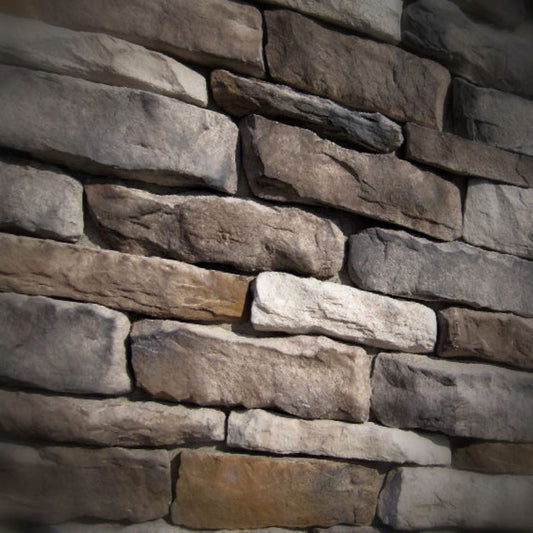
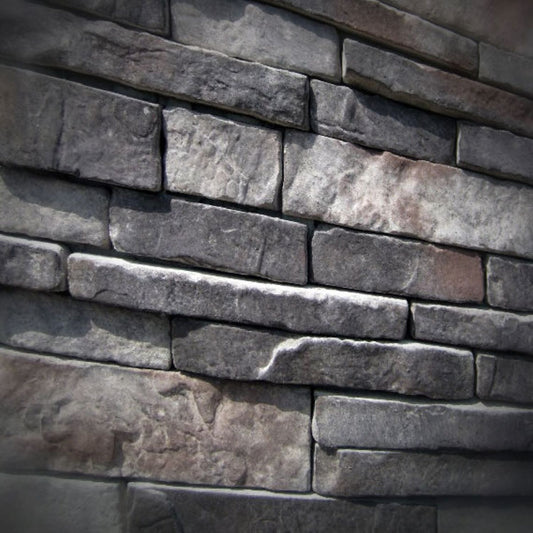
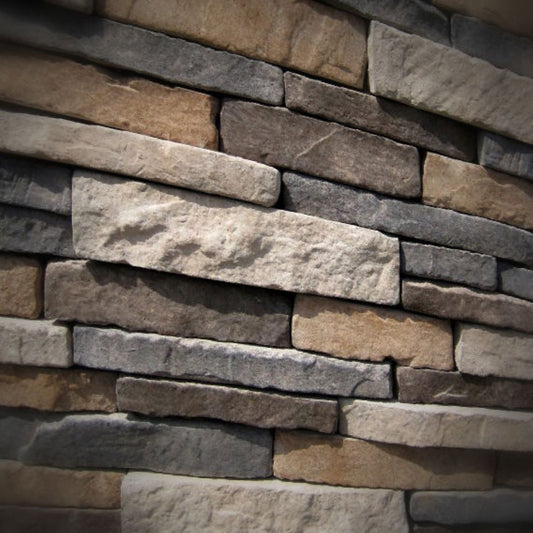
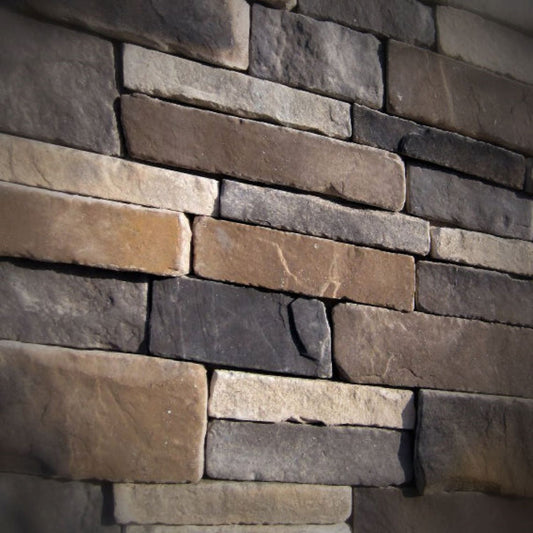
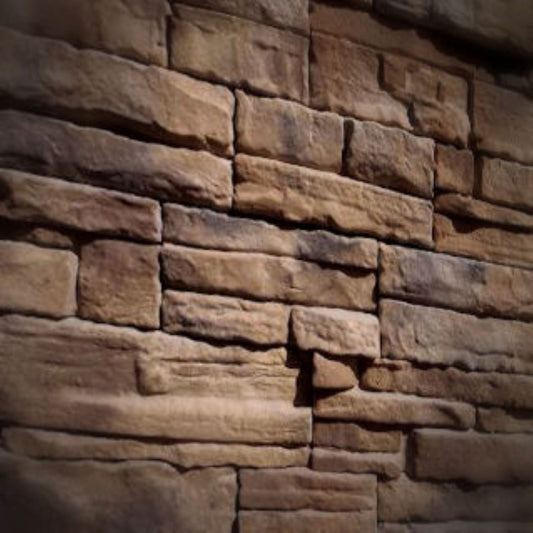
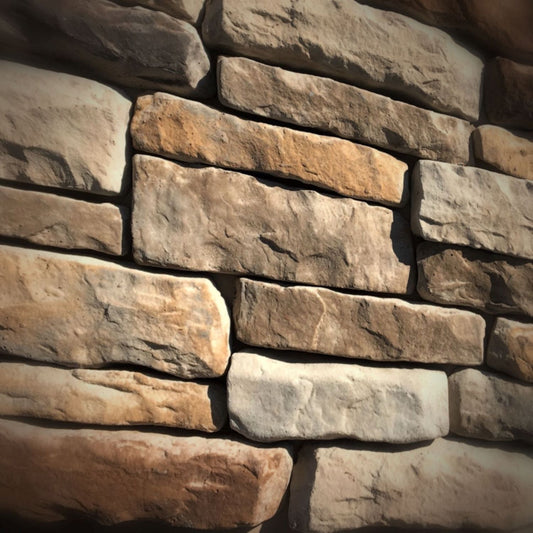
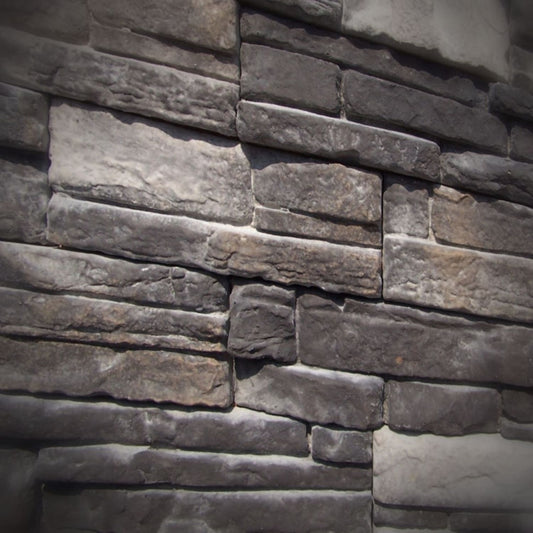
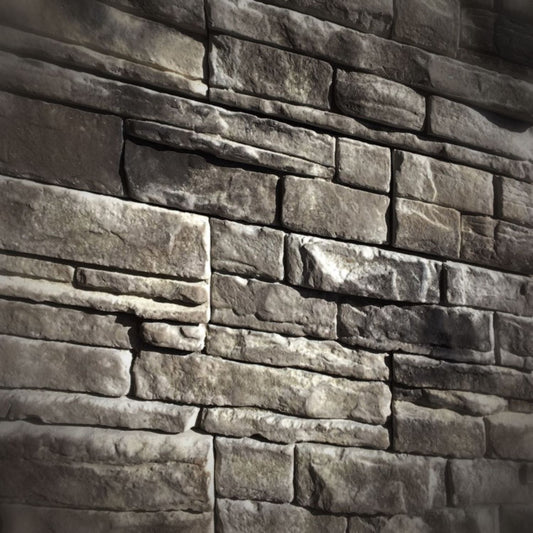
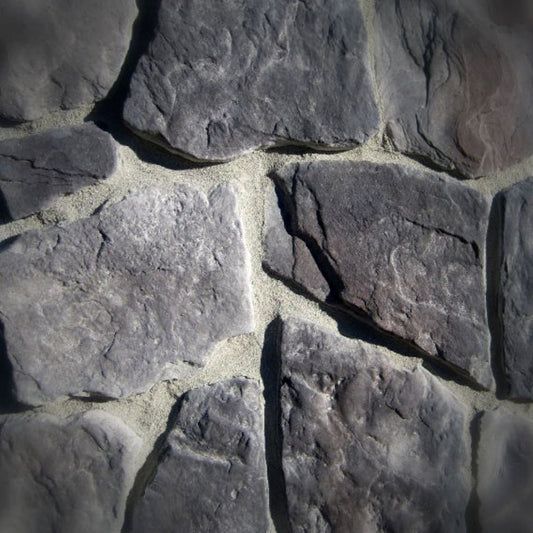
Pictured is stack stone ozark.