Stone Veneer and Wood Burning Stoves
Share
Originally posted June 8 2025, updated September 9 2026.
Manufactured stone veneer can be used around a wood-burning stove when it is installed as part of a properly designed, code-compliant assembly. Stone veneer is non-combustible, but it does not eliminate required clearances between the stove and combustible materials. Always follow the stove manufacturer’s clearance requirements and local building codes.
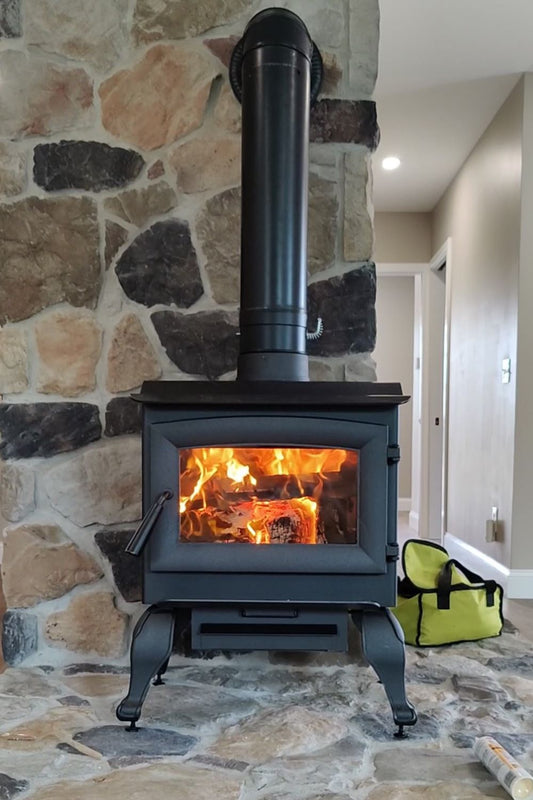
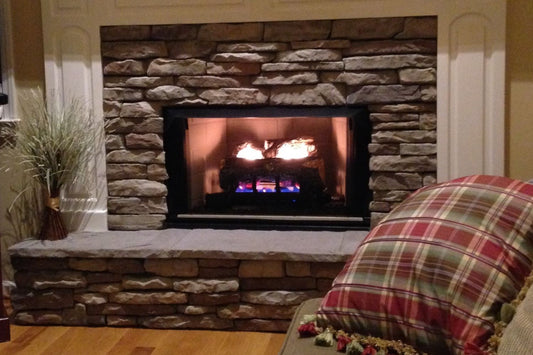
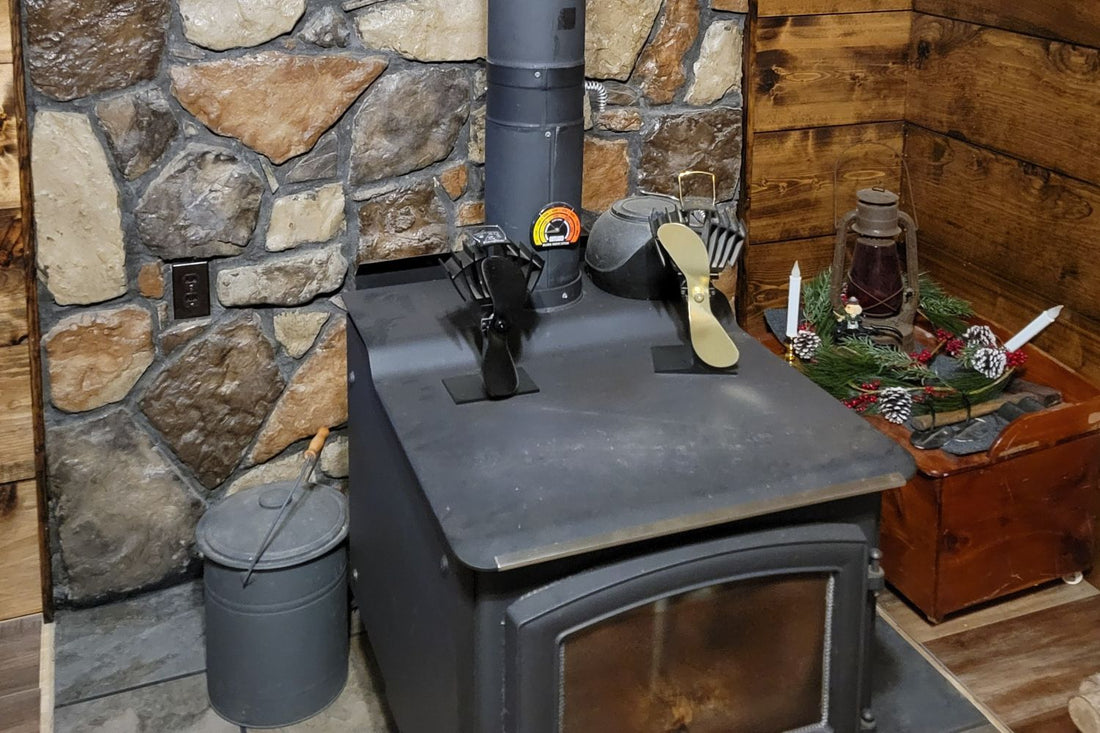
Wood-burning stoves bring warmth, character, and a timeless focal point to a home. When surrounded by stone veneer, a stove can become even more visually striking, creating the cozy appearance of a traditional masonry hearth without the weight and expense of full-thickness natural stone.
But homeowners planning a wood stove surround often have an important question: can you use manufactured stone veneer around a wood-burning stove? The answer is generally yes. Manufactured stone veneer can be an attractive choice for a wood stove surround when it is installed correctly and used as part of a properly designed, non-combustible assembly. However, stone veneer should never be considered a replacement for the clearances, heat shielding, insulation, or other safety requirements specified by the stove manufacturer and local building codes.
Understanding how heat affects the surrounding wall, what materials belong behind the veneer, and how much space must remain around the stove is essential before beginning installation.
Why Use Manufactured Stone Veneer Around a Wood-Burning Stove?
Manufactured stone veneer is designed to recreate the appearance of natural stone while being considerably lighter and easier to work with than full-thickness masonry. That makes it an appealing option for homeowners who want the appearance of a traditional stone fireplace or wood stove wall without constructing a massive masonry structure.
One of the biggest advantages is its design versatility. Manufactured stone veneer is available in a wide range of colors, textures, shapes, and profiles, allowing the surround to complement virtually any interior style.
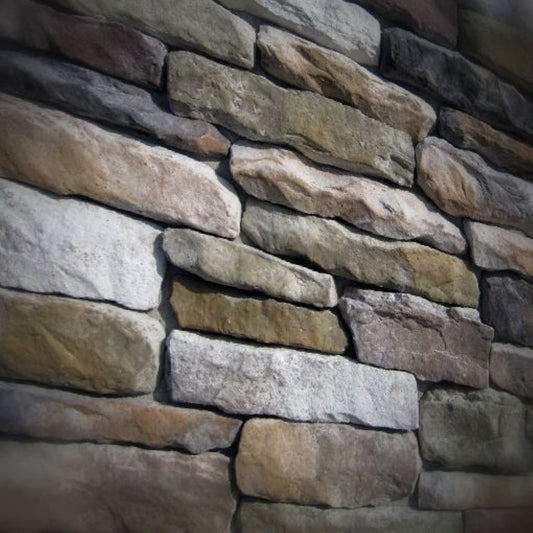
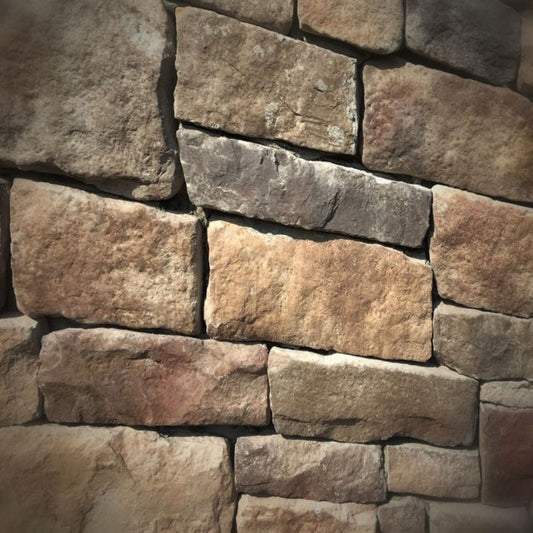
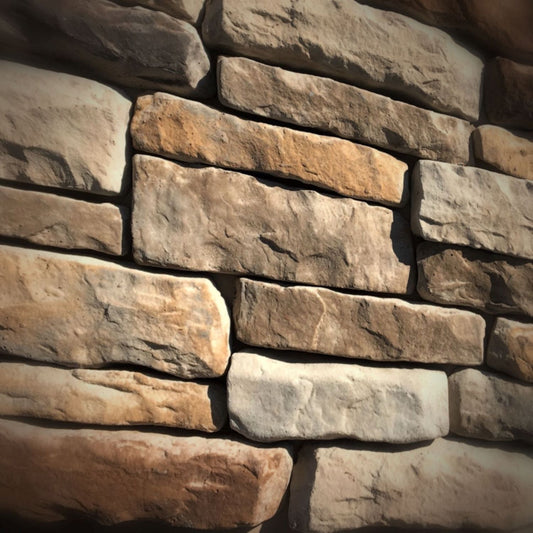
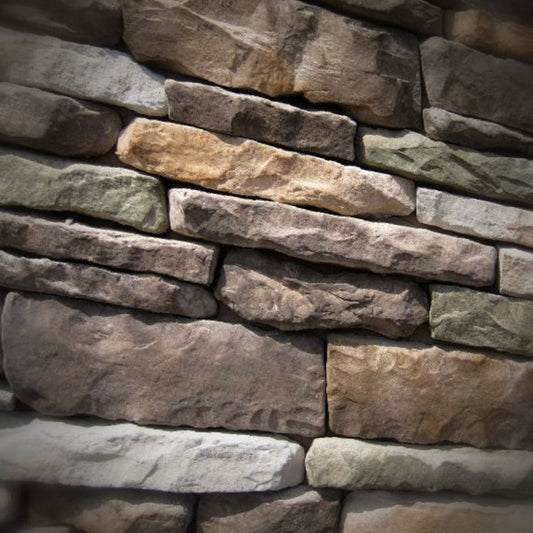
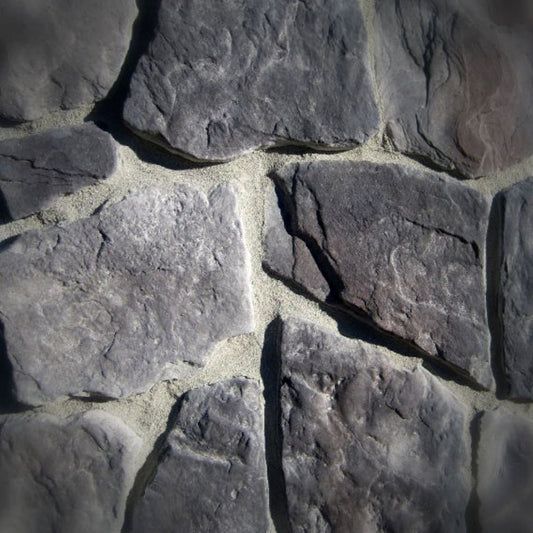
A rustic fieldstone can create a traditional cabin atmosphere, while ledgestone can provide a more structured appearance. Hackett stone, sometimes called castle stone, can give a wood-burning stove a substantial old-world character. Panelized stone veneer can also provide a more streamlined appearance and simplify installation across larger wall surfaces.
Stone veneer can also help transform the wall behind a wood stove into a major architectural feature. Instead of treating the stove as a standalone appliance, homeowners can use the veneer to create a full-height accent wall that visually anchors the room.
Is Manufactured Stone Veneer Heat Resistant?
Manufactured stone veneer itself is generally non-combustible because it is manufactured primarily from cementitious materials and mineral aggregates. However, that does not mean every component of a stone veneer installation is automatically safe at high temperatures. This distinction is especially important around a wood-burning stove.
A stone veneer facing may not ignite when exposed to heat, but the wall assembly behind it can contain combustible materials. Wood framing, sheathing, insulation, adhesives, or other components may have different temperature limitations. For that reason, installing stone veneer over a combustible wall does not automatically make the entire wall heat-safe.
The stove manufacturer’s installation instructions should always be consulted before construction begins. Those instructions typically specify minimum clearances between the stove and nearby combustible materials. Local building and fire codes may also impose additional requirements.
Wood Stove Clearances Matter
One of the most important considerations when installing stone veneer around a wood-burning stove is clearance.
Every wood stove is different. Required clearances can vary depending on the stove design, whether the stove is listed for reduced clearances, the presence of an approved heat shield, and the materials surrounding the appliance. This means there is no universal clearance distance that applies to every wood-burning stove.
A homeowner should never assume that because a wall is covered with stone veneer, the stove can be installed directly against it. The required clearance must be determined from the stove manufacturer's installation manual and applicable local codes.
In some installations, an approved wall protection or heat-shield system can reduce the required clearance. These systems may incorporate non-combustible materials and an air space that allows heated air to circulate behind the shield.
The specific construction and dimensions of that system matter. Simply attaching cement board or stone veneer to an existing wall does not necessarily create an approved heat shield.
What Goes Behind Stone Veneer Near a Wood Stove?
The substrate behind manufactured stone veneer is an important part of the installation.
For a typical stone veneer application, the veneer is installed over an appropriate prepared substrate using mortar. Around a wood-burning stove, however, the entire wall assembly needs to be evaluated for heat exposure.
Non-combustible materials such as properly selected cementitious backer materials may be appropriate in certain applications, but the correct assembly depends on the stove, wall construction, required clearances, and applicable code.
It is important not to confuse a non-combustible veneer with a complete fire-rated wall assembly. Stone veneer provides a non-combustible exterior surface, but it does not by itself protect combustible framing from excessive heat.
If the stove requires a specific wall protection system, that system should be installed according to its listing or the applicable building requirements before the stone veneer is applied.
When there is any uncertainty about the wall construction or required protection, consulting a qualified professional familiar with wood stove installations is the safest approach.
Choosing a Stone Veneer Style for a Wood Stove Surround
Once safety and installation requirements have been addressed, choosing the right stone veneer becomes the fun part.
The texture and scale of the stone can dramatically change the appearance of the room. A traditional cast-iron wood stove tends to pair particularly well with natural-looking stone profiles because the combination creates a warm, rustic focal point.
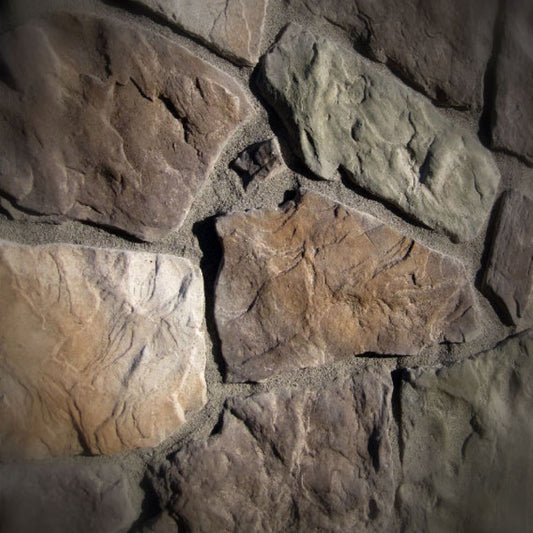
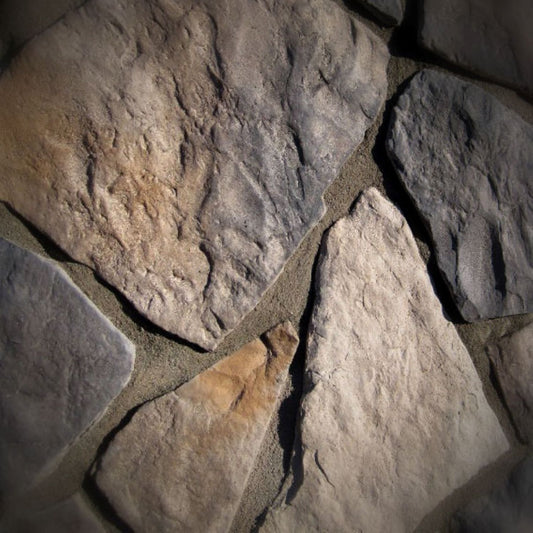
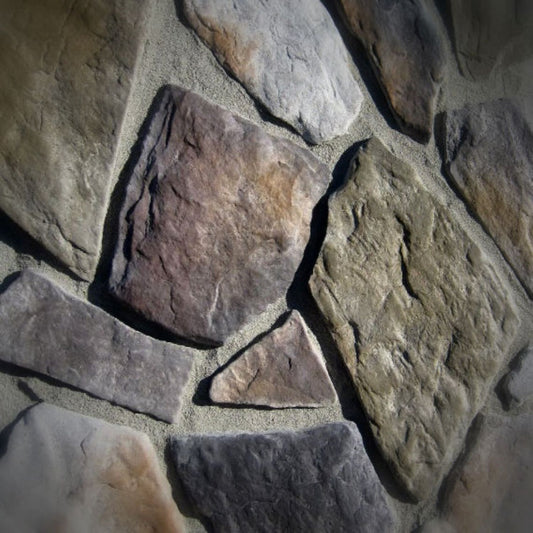
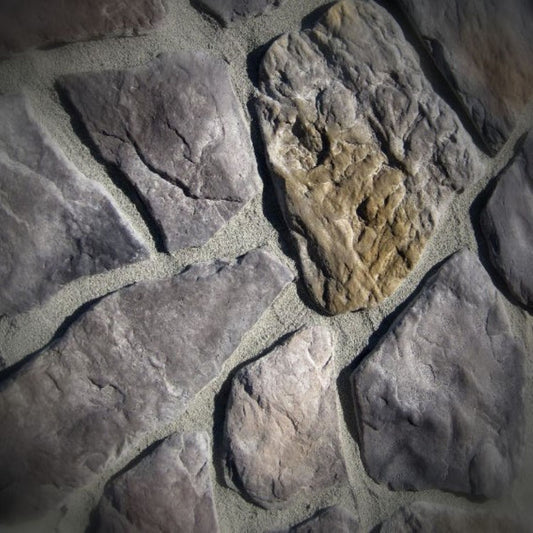
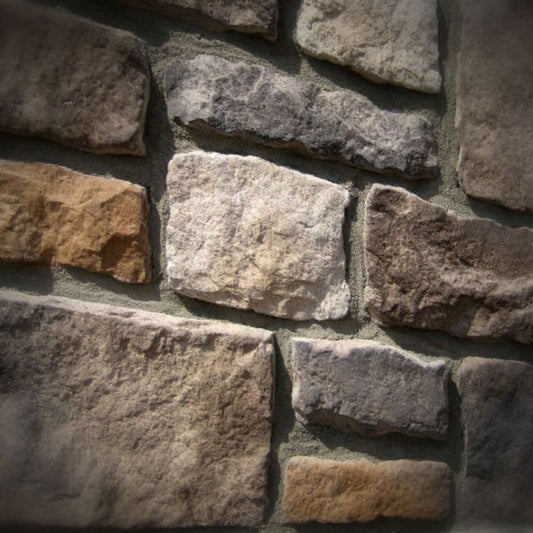
Fieldstone is a popular choice for homeowners who want an informal, traditional appearance. Its varied shapes and sizes mimic the look of naturally collected stones and work particularly well in cabins, farmhouses, and rustic interiors.
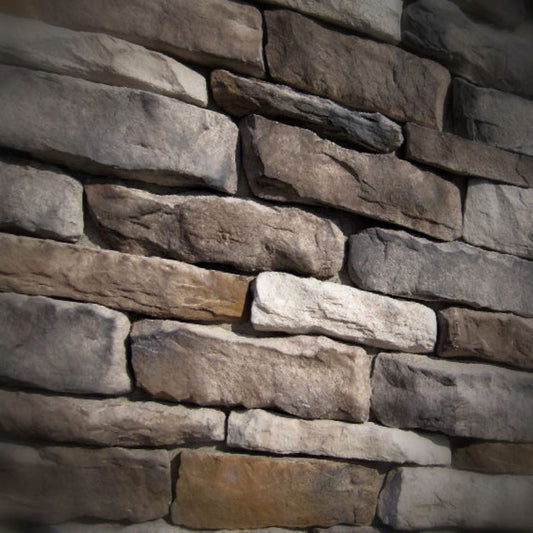
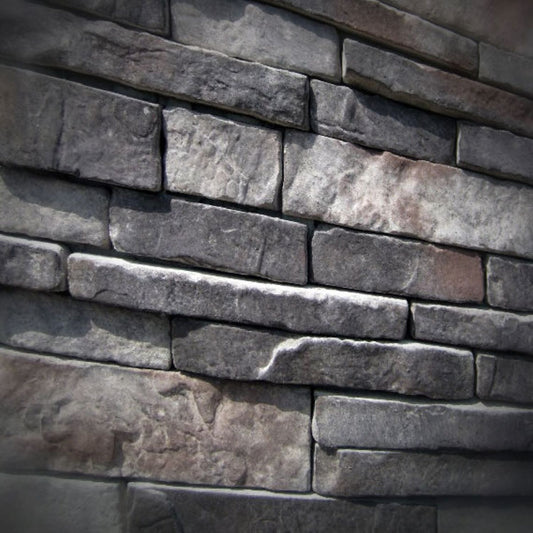
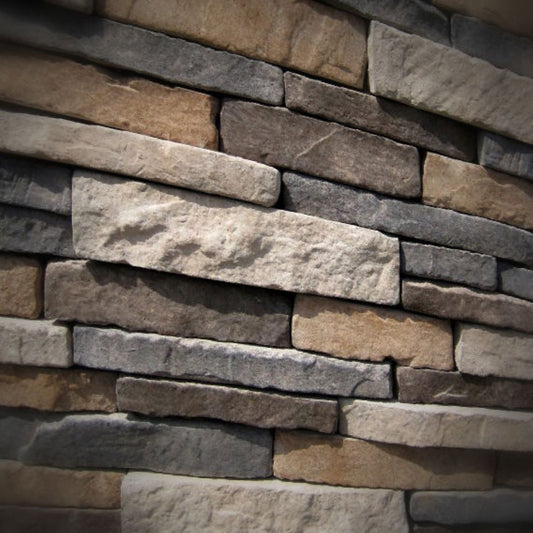
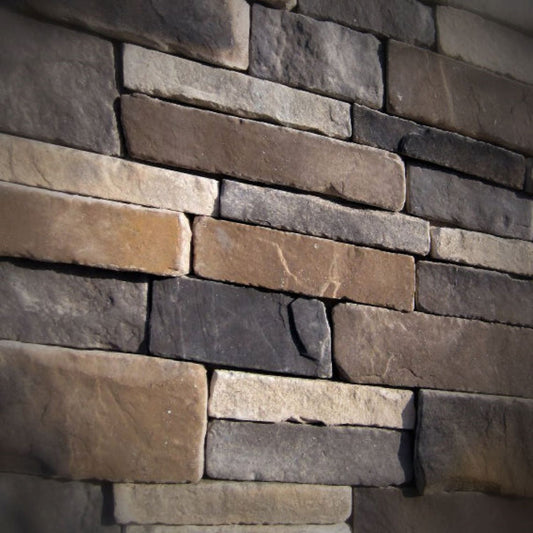
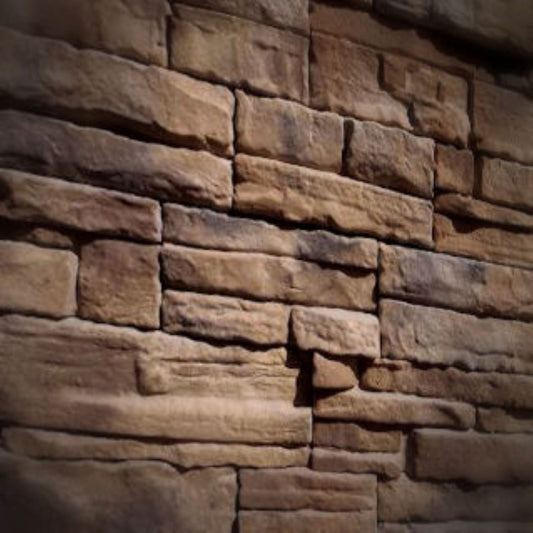
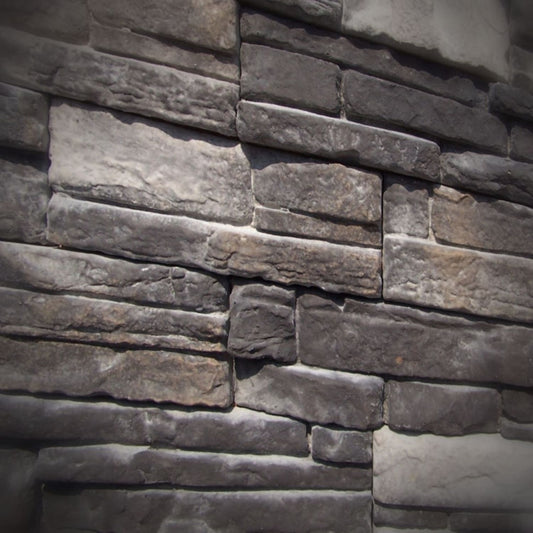
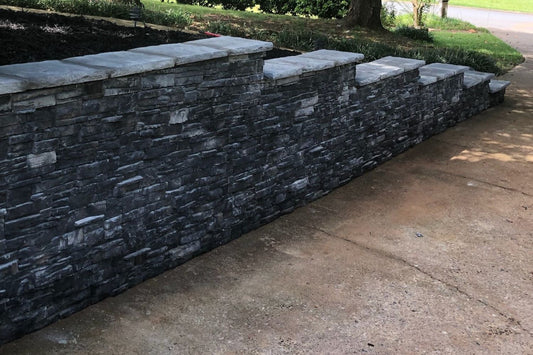
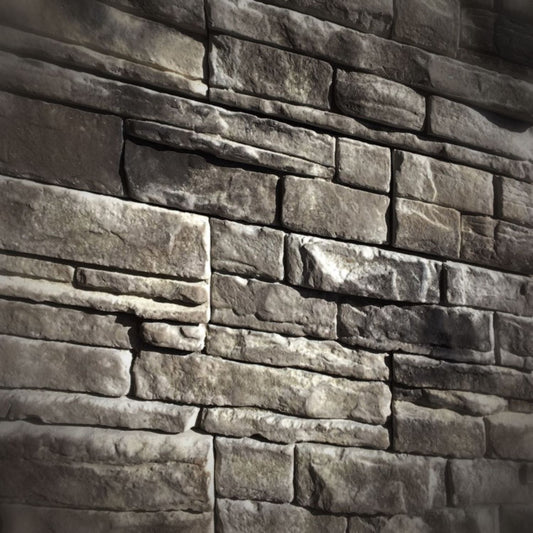
Ledgestone provides a more linear appearance. Its longer, thinner stones emphasize horizontal lines and can create a rugged but organized backdrop for the stove.
Stacked stone offers a tightly fitted appearance with minimal visible mortar joints, putting more emphasis on the individual stone faces, shapes, and color variation.
Hackett stone, also known as castle stone, can provide a more substantial old-world appearance. Its larger, more architectural shapes work especially well when the stone surround is intended to become a dominant feature of the room.
For larger walls, panelized stone veneer can also make installation more efficient while maintaining a consistent stone appearance.
Creating a Full-Height Stone Feature Wall
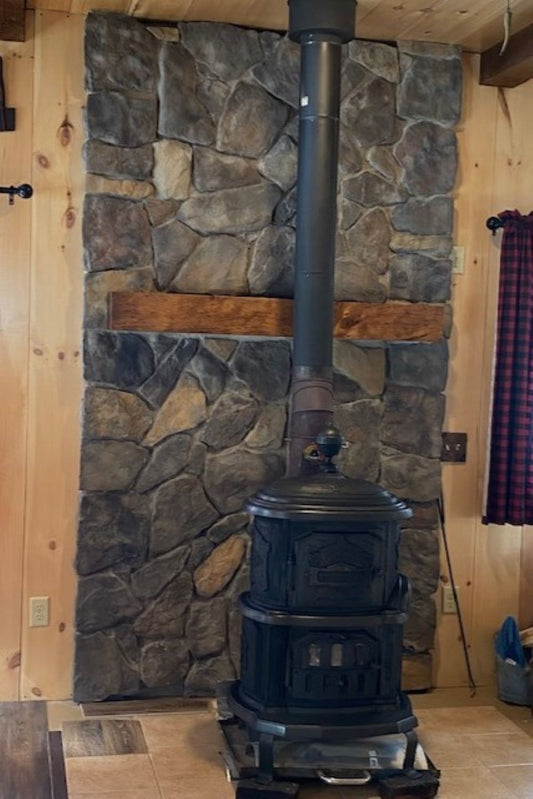
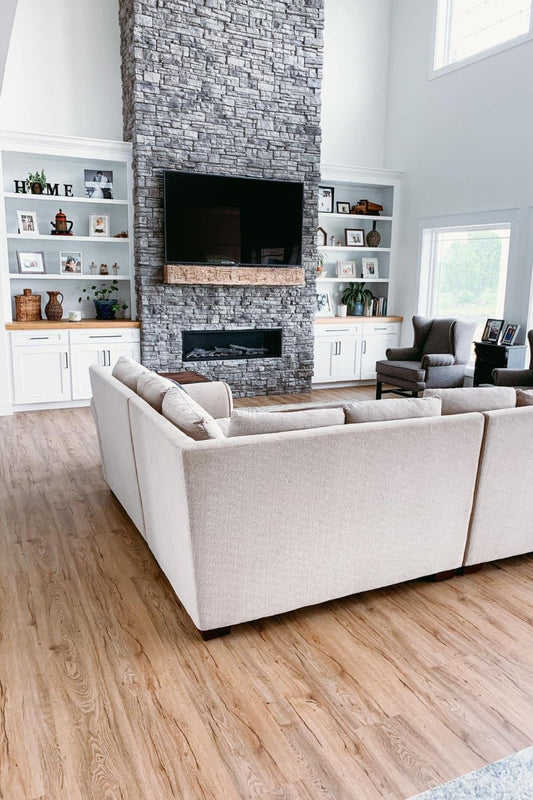
A wood-burning stove does not have to be surrounded by stone only at the immediate appliance opening. Extending manufactured stone veneer vertically behind the stove can create a dramatic full-height feature wall.
This approach is particularly effective in rooms with high ceilings or open floor plans. The stone visually connects the stove to the architecture of the room and creates a strong focal point.
The key is to separate the design area from the required safety area. The veneer can extend well beyond the stove as a decorative finish, but the stove itself must still maintain all required clearances and protections.
Planning the entire wall before installation can also help determine where stone should terminate, how corners will be handled, and whether accessory pieces are needed.
Installing Stone Veneer Around a Wood-Burning Stove
Proper installation is essential for both appearance and long-term performance.
Manufactured stone veneer should be installed using the mortar and installation methods specified for the product. For manufactured stone veneer, Type S mortar is required, and adhesives are not recommended.
The substrate should be properly prepared before the veneer is installed. Depending on the surface and application, this can include metal lath and a mortar scratch coat. Interior applications may have different preparation requirements than exterior installations, so the manufacturer's installation instructions should be followed for the specific project.
Around a wood-burning stove, it is particularly important that the stone veneer not be used to conceal an improperly prepared or unsafe wall assembly.
Mortar should also be given adequate time to cure before exposing the installation to significant heat. Operating a wood stove before the mortar has properly cured can contribute to cracking or bonding problems.
If the project involves a new stove installation, it is generally best to coordinate the stove, wall protection, substrate, and stone veneer installation rather than treating the veneer as an afterthought.
Adding Hearthstones and Mantel Accents
A stone veneer wall can be finished with complementary hearthstones, trim pieces, or other masonry accents.
A properly selected hearth creates a visual foundation for the stove while helping define the transition between the appliance and surrounding flooring. Coordinating the hearthstone with the wall veneer can create a more cohesive finished appearance.
A wood mantel can also provide contrast against the stone, particularly in rustic or farmhouse-inspired interiors. However, because wood is combustible, mantel placement and clearance requirements must be carefully considered.
The same principle applies to decorative wood shelves, trim, cabinetry, and other combustible materials near the stove. They should be positioned according to the applicable requirements rather than simply based on the location of the stone veneer.
Does Stone Veneer Require Maintenance Around a Wood Stove?
Manufactured stone veneer is generally low maintenance once properly installed. Routine care typically involves keeping the surface free of dust and dirt and addressing spills or deposits using cleaning methods recommended by the manufacturer.
Because wood stoves can produce soot and other residues, homeowners may occasionally need to clean the stone surrounding the appliance. Harsh chemicals or aggressive cleaning methods should be avoided unless specifically approved for the veneer.
The stone itself can remain attractive for many years when properly installed and maintained. Color stability also depends on the manufacturing process and materials used. Products manufactured with technologies designed to improve color retention can help preserve the appearance of the veneer over time.
Can Stone Veneer Be Installed Directly Against a Wood Stove?
No. Stone veneer should not be used as a reason to eliminate the clearance required by the wood stove manufacturer.
Even though manufactured stone veneer is non-combustible, the stove produces substantial radiant and convective heat. The concern is not simply whether the stone itself will burn; it is whether heat can reach combustible materials behind, beside, above, or near the appliance.
Always follow the stove's listed clearance requirements and any requirements for an approved heat shield or wall protection system.
If the stove installation manual calls for a specific clearance from combustible materials, that clearance remains important even when the wall is covered with stone veneer.
Frequently Asked Questions About Stone Veneer and Wood Burning Stoves
Can you put manufactured stone veneer around a wood-burning stove?
Yes, manufactured stone veneer can generally be installed around a wood-burning stove when the installation complies with the stove manufacturer's clearance requirements and local building codes. The veneer itself may be non-combustible, but it does not eliminate required clearances from combustible materials.
Is stone veneer fire resistant?
Manufactured stone veneer is generally non-combustible because it is made primarily from cementitious materials and mineral aggregates. However, the fire and heat performance of the complete wall assembly depends on the substrate and other materials behind the veneer. Stone veneer should not be treated as a standalone fire-rated assembly.
How far should stone veneer be from a wood-burning stove?
The required clearance depends on the specific wood stove and its installation requirements. There is no single clearance distance that applies to every stove. Always follow the clearance requirements in the stove manufacturer's installation manual and applicable local codes.
Can you install stone veneer over cement board behind a wood stove?
Cement board or another appropriate non-combustible substrate may be part of a stone veneer installation near a wood stove, but the correct wall assembly depends on the stove and its clearance requirements. Cement board alone does not necessarily constitute an approved heat shield or fire-rated assembly.
What type of stone veneer looks best around a wood stove?
Fieldstone, ledgestone, stacked stone, and hackett stone are all popular choices for wood stove surrounds. Fieldstone creates a rustic appearance, ledgestone emphasizes horizontal lines, stacked stone provides a tightly fitted look, and hackett stone creates a more substantial old-world aesthetic.
Can you use a wood mantel with a stone veneer wood stove surround?
A wood mantel can be used in some wood stove installations, but combustible mantel materials must meet the clearance requirements specified by the stove manufacturer and local building codes. Stone veneer around the stove does not automatically make a nearby wood mantel safe.
Stone Veneer and Wood Burning Stoves
Manufactured stone veneer can be an excellent way to create a beautiful wood-burning stove surround. Its non-combustible cementitious construction, relatively light weight, and wide variety of colors and profiles make it a practical alternative to full-thickness natural stone.
The most important consideration is understanding that stone veneer is one component of the finished wall, not a substitute for proper wood stove clearances or an approved heat-protection system.
By following the stove manufacturer's installation requirements, using appropriate non-combustible materials where required, preparing the substrate correctly, and installing the veneer according to manufacturer instructions, homeowners can create a safe and visually impressive focal point.
Whether you prefer rustic fieldstone, horizontal ledgestone, tightly fitted stacked stone, or substantial hackett stone, manufactured stone veneer can help transform the area around a wood-burning stove into one of the most inviting features in your home.
What's next?
Bring your vision to life with our premium stone veneer! Shop now to find the perfect style or order a sample to see and feel the texture and color firsthand. Get your project started today!
Have a Question?
Please see our full terms of service or check out our frequently asked questions.
For general information and questions please call: (864) 882-8960 Mon. - Fri. 8am - 5pm (EST) or email: info@blackbearmountainstone.com we are more than happy to help you.
Or you can submit your questions via our contact us page.
We look forward to working with you on your upcoming project.
The Black Bear Mountain Stone Team
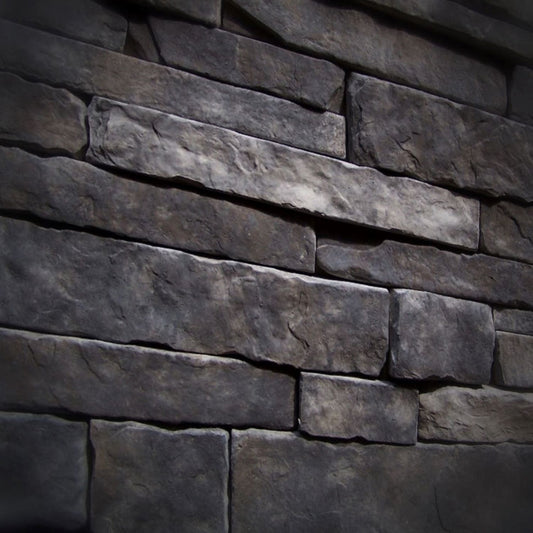
Pictured is field stone ozark.