

What is Fieldstone Manufactured Stone Veneer? Styles, Uses, and Design Ideas
Share
Originally posted March 20, 2024, updated January 15, 2026.
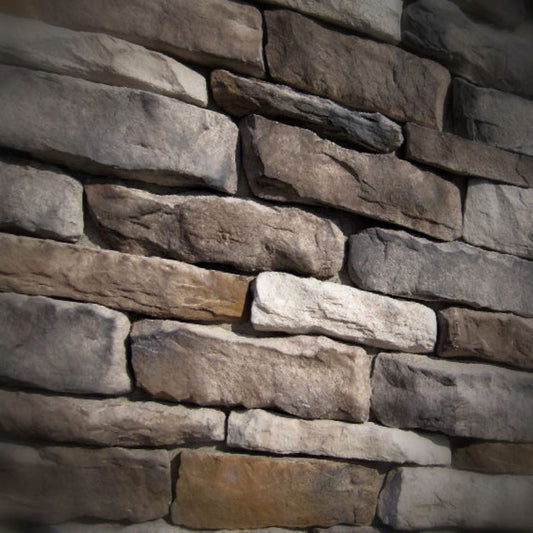
Fieldstone manufactured stone veneer is a cement-based building material designed to recreate the irregular shapes, natural textures, and earthy color variations of traditional fieldstone. It offers the character of natural stone with the consistency, versatility, and lighter weight of manufactured stone veneer.
Fieldstone has a distinctive character that comes from its irregular shapes, varied sizes, textured surfaces, and natural-looking blend of colors. Traditionally associated with stone walls, farmhouses, cottages, and rural landscapes, fieldstone has a long history of bringing warmth and a connection to nature into architectural design. Today, fieldstone manufactured stone veneer offers a way to capture that same visual character using a modern manufactured material.
Rather than being quarried and transported as natural stone, manufactured stone veneer is produced using molds and carefully selected materials to recreate the appearance of real stone. Fieldstone profiles are specifically designed to reflect the organic, uneven appearance that makes traditional fieldstone so recognizable. The result is a stone veneer with a relaxed, rustic appearance that can work just as well on a traditional home as it can alongside more contemporary materials.
For homeowners, builders, designers, and masons, fieldstone manufactured stone veneer provides an alternative to natural stone that combines a familiar, organic appearance with the practical advantages of a manufactured product.
What is Manufactured Fieldstone Veneer?
Fieldstone manufactured stone veneer is a cement-based veneer designed to replicate the appearance of natural fieldstone. Like other manufactured stone veneer products, it is made using Portland cement, lightweight aggregates, and iron oxide mineral pigments. Molds are used to create individual pieces with varied shapes and surface textures that resemble the natural characteristics of fieldstone.
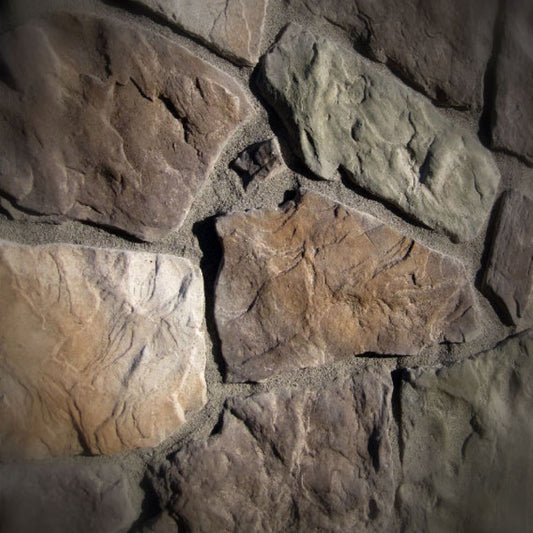
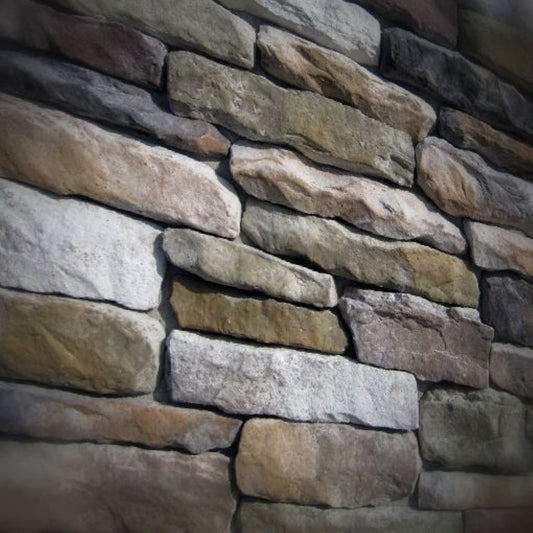
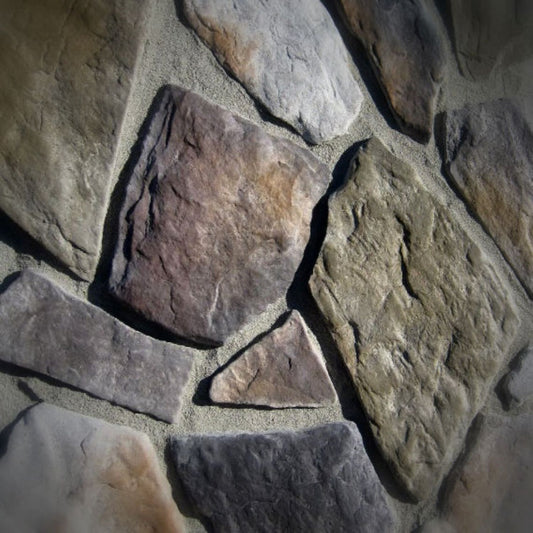
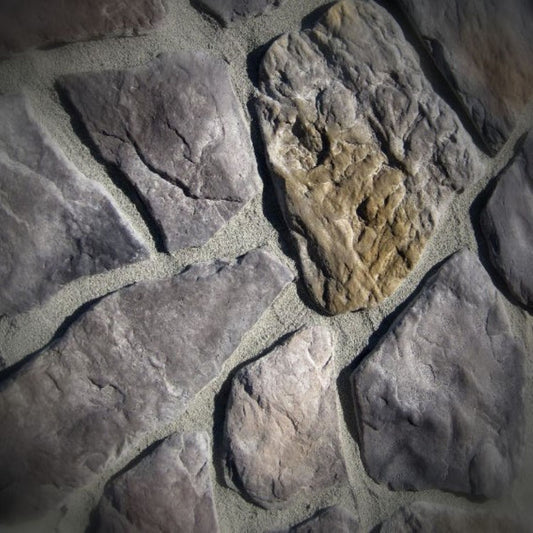
The defining feature of fieldstone is its irregularity. Unlike ashlar or other more geometric stone profiles, fieldstone typically includes stones of different sizes and shapes with uneven edges and varied faces. This creates a more organic installation pattern rather than a uniform course or repeating layout.
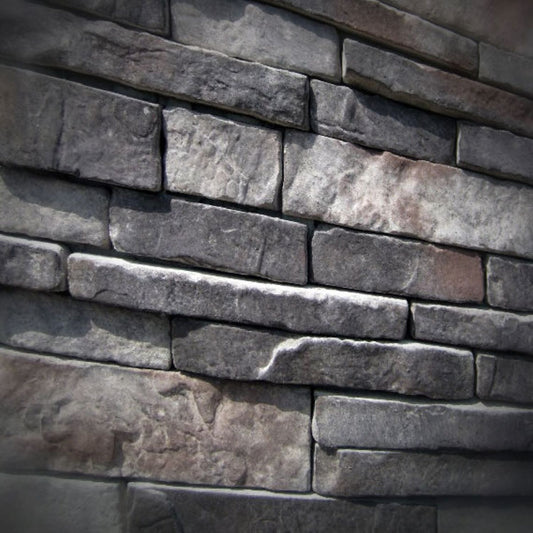
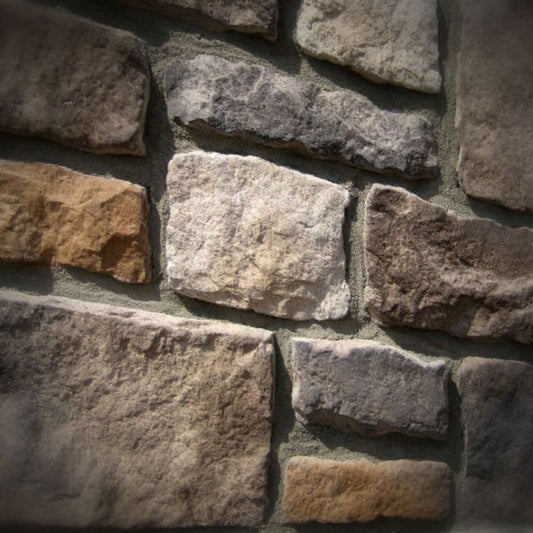
Color variation is another important part of the fieldstone appearance. Depending on the particular product, fieldstone can include combinations of warm browns, tans, grays, creams, and other earthy tones. These variations help create the depth and visual movement associated with natural stone.
The goal is not to make every piece identical. Instead, manufactured fieldstone is designed to provide enough variation in size, shape, texture, and color to create a natural-looking finished installation.
The Natural Character of Fieldstone
Much of fieldstone's appeal comes from its relationship with the landscape. Traditional fieldstone was often gathered from fields and surrounding areas rather than cut from a quarry into precise shapes. As a result, fieldstone construction naturally developed an irregular appearance, with individual stones fitting together according to their natural shapes.
That organic quality remains central to the design of fieldstone manufactured stone veneer. Individual pieces can vary considerably, creating a finished wall that feels assembled rather than mechanically patterned. The irregular edges and textured surfaces also produce shadows that change as lighting moves across the surface.
This makes fieldstone particularly effective when the goal is to add warmth, texture, and visual depth. It can make a large exterior wall feel less imposing, give an interior fireplace more character, or help an outdoor feature feel connected to its surrounding landscape.
Fieldstone also works across a surprisingly broad range of architectural styles. Its traditional roots make it a natural choice for rustic homes, farmhouses, cabins, and cottages, but the texture can also provide an appealing contrast against modern materials such as smooth siding, wood, metal, and glass.
Fieldstone Manufactured Stone Veneer vs. Natural Fieldstone
Manufactured stone veneer and natural fieldstone can create a similar overall visual effect, but they are different materials. Natural fieldstone is genuine stone collected or quarried from natural sources, while manufactured stone veneer is an engineered cement-based product created to replicate the appearance of natural stone.
One of the primary practical differences is weight. Natural stone can be substantially heavier and may require additional considerations for handling and installation. Manufactured stone veneer is produced as a veneer product, making it considerably lighter than full-depth natural stone.
Manufactured fieldstone also provides greater consistency from one production run to another. Manufacturers can control the molds, materials, pigments, and production process to create a specific appearance. At the same time, quality manufactured stone veneer intentionally incorporates variation so the finished installation does not look overly repetitive.
Cost can also be a consideration. Natural stone may involve expenses associated with quarrying, transportation, handling, and labor. Manufactured stone veneer can provide the appearance of natural stone while offering a more accessible material option for many projects.
Neither material is inherently right for every application. The best choice depends on the desired appearance, project requirements, installation conditions, budget, and applicable building requirements.
Why Choose Fieldstone Manufactured Stone Veneer?
The appeal of fieldstone manufactured stone veneer comes from the combination of appearance and practicality. It provides the irregular, natural character associated with fieldstone without requiring every project to use full-depth natural stone.
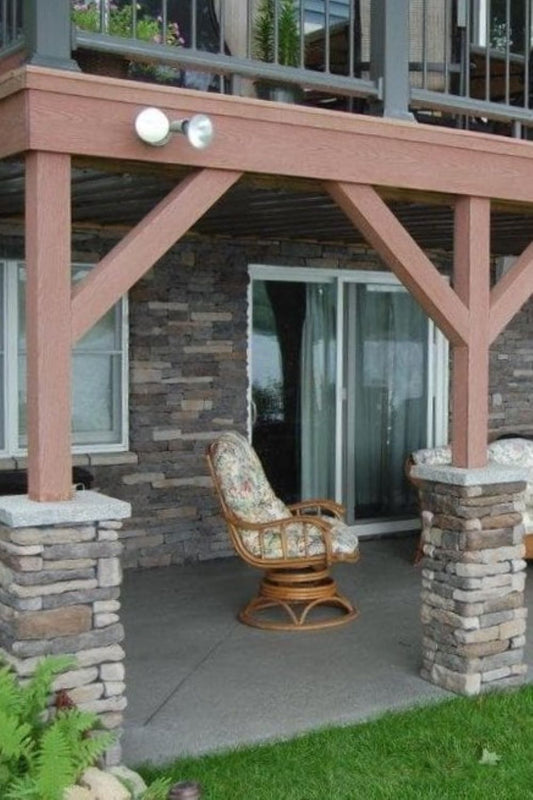
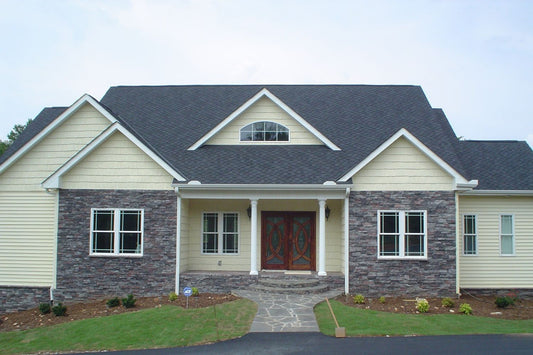
Its versatility is another major advantage. Fieldstone veneer can be used to create an entire exterior facade or applied more selectively as an architectural accent. A smaller installation can add texture around an entryway, fireplace, gable, column, or other architectural feature without covering the entire structure in stone.
Manufactured fieldstone is also available in a variety of color combinations. This gives designers and homeowners the ability to select a look that complements the surrounding architecture rather than being limited to the colors available from a particular natural stone source.
When properly selected and installed according to the manufacturer's requirements, manufactured stone veneer can provide long-term performance in both interior and exterior applications. Its cement-based construction makes it a substantial architectural material rather than a thin decorative surface intended simply to imitate stone visually.
Where Can Fieldstone Manufactured Stone Veneer Be Used?
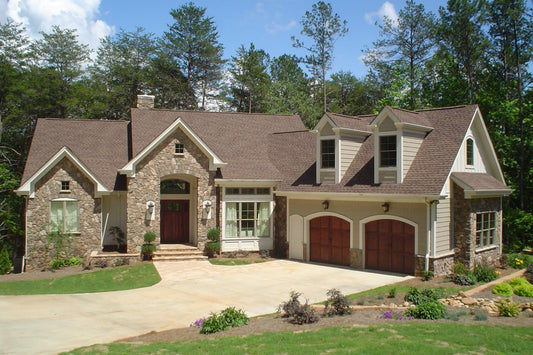
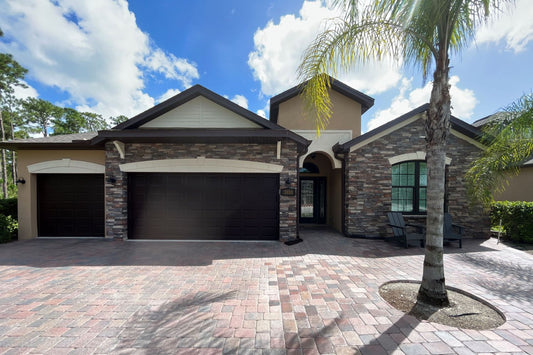
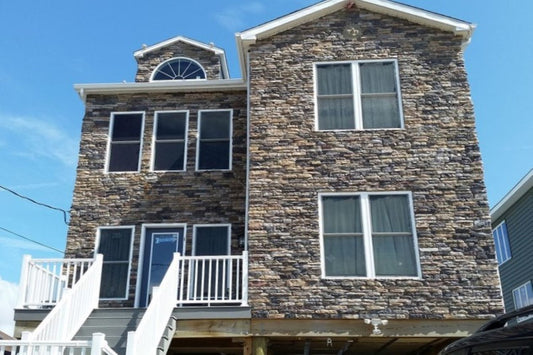
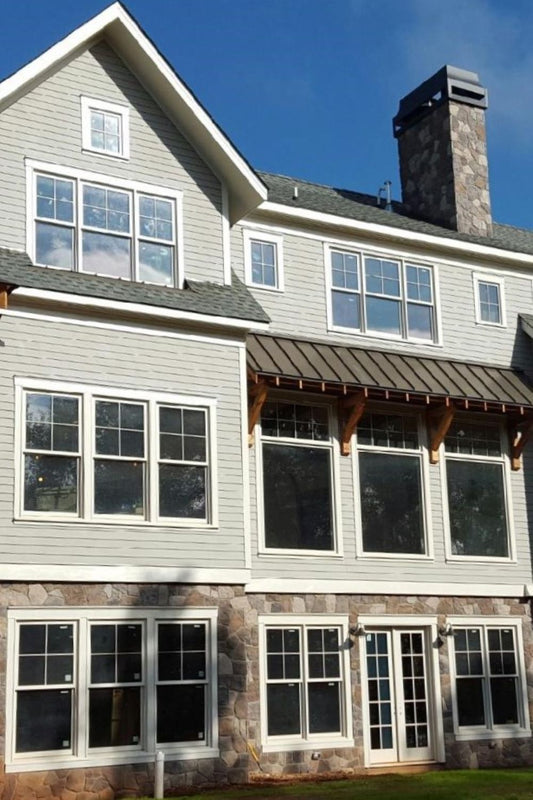
Fieldstone manufactured stone veneer is well suited to both exterior and interior applications. On the exterior of a home, it can be used to create a complete stone facade or highlight selected architectural areas. Its irregular appearance works particularly well around entryways, chimneys, gables, columns, and other areas where texture can strengthen the character of the architecture.
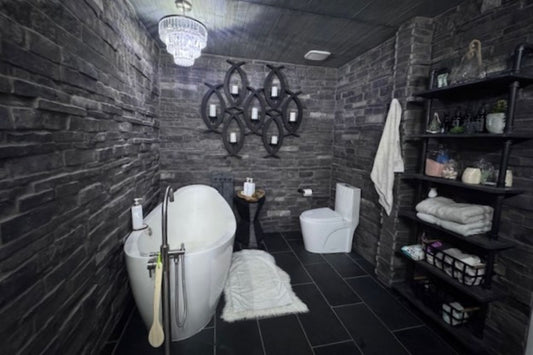
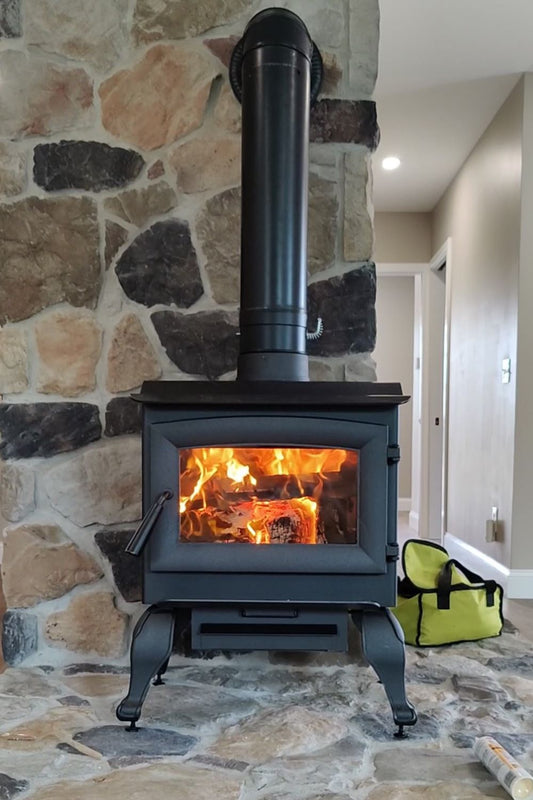
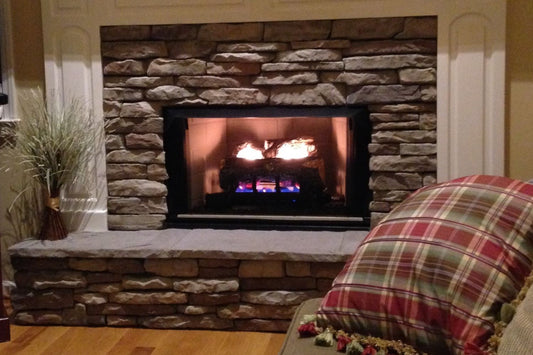
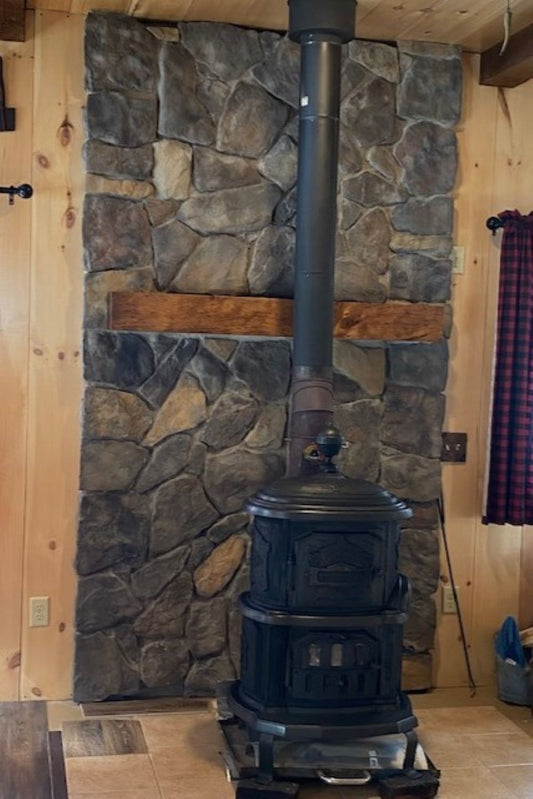
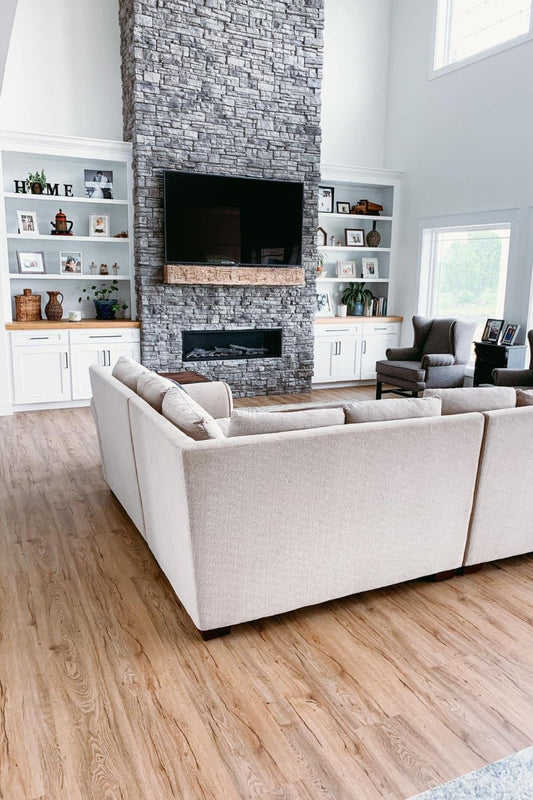
Inside the home, fieldstone can create a strong focal point without requiring an entire room to be covered in stone. Fireplaces are a particularly natural application because the irregular shapes and earthy colors give the fireplace a substantial, grounded appearance. Fieldstone can also be used for interior accent walls and other architectural features where texture is desired.
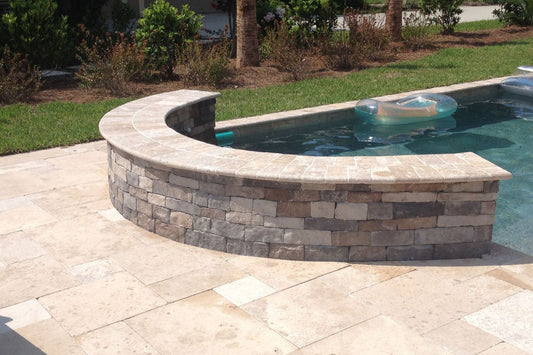
Outdoor living spaces provide another opportunity for fieldstone. Depending on the specific product and application, manufactured stone veneer can be incorporated into outdoor kitchens, patios, landscape features, and other constructed elements. The natural appearance of fieldstone can help these structures blend visually with surrounding landscaping.
As with any manufactured stone veneer, the appropriate application depends on the specific product, substrate, installation method, local requirements, and manufacturer's instructions.
Designing With Fieldstone Veneer
Fieldstone works best when its natural irregularity is allowed to be part of the design. Unlike tightly coursed stone profiles, fieldstone does not depend on uniform horizontal lines or identical pieces. Its visual appeal comes from the interaction of different shapes, sizes, textures, and colors.
That makes the surrounding materials especially important. Wood can emphasize the warmth of fieldstone, while smooth metal or glass can create a stronger contemporary contrast. Brick, stucco, siding, and other exterior finishes can also be paired with fieldstone to create transitions between different architectural materials.
Color selection can influence the overall personality of the installation. Warmer fieldstone colors can create a traditional or rustic appearance, while cooler grays and neutral tones can give the same irregular stone profile a more contemporary feel. Because manufactured stone veneer contains intentional color variation, looking at an actual sample can be especially helpful when choosing a profile for a project.
The scale of the installation matters as well. Fieldstone can be visually substantial, particularly when used across a large wall. Balancing it with areas of simpler materials can allow the texture of the stone to stand out without making the overall design feel visually crowded.
The Long-Term Appeal of Fieldstone
One reason fieldstone continues to appear in architectural design is that its character does not depend heavily on short-term trends. Irregular stone, natural colors, and textured surfaces have remained popular across generations because they connect buildings with natural materials and traditional craftsmanship.
Manufactured fieldstone brings those qualities into contemporary construction. It can be used to make a newly built home feel established, add character to a renovation, or introduce natural texture into a modern design.
Its versatility also gives it longevity from a design perspective. A fieldstone fireplace can complement changing furnishings, while an exterior stone accent can continue to work as siding, trim, landscaping, and other elements are updated over the years.
Rather than being limited to one particular architectural style, fieldstone provides a natural texture that can adapt to the design surrounding it.
Is Fieldstone Manufactured Stone Veneer a Good Choice?
For projects that call for an organic stone appearance, fieldstone manufactured stone veneer can be an excellent option. Its irregular shapes, varied textures, and earthy color combinations recreate the visual qualities that make natural fieldstone so appealing, while its manufactured construction offers practical advantages for modern building projects.
The key to a successful fieldstone installation is choosing a profile and color combination that fits the architecture and understanding how the individual stones should be arranged during installation. Because fieldstone relies on variation, the finished appearance depends not only on the material itself but also on how the individual pieces are selected and placed.
Whether used on an exterior facade, around a fireplace, on an accent wall, or as part of an outdoor living space, fieldstone manufactured stone veneer can add a substantial amount of character without overwhelming the rest of the design.
Fieldstone Brings Natural Character to Manufactured Stone Veneer
Fieldstone manufactured stone veneer combines the irregular beauty of traditional fieldstone with the practical advantages of a modern manufactured material. Its varied shapes, textured surfaces, and natural-looking color blends create the organic appearance that has made fieldstone a lasting architectural favorite.
From exterior facades and entryways to fireplaces, accent walls, and outdoor living spaces, fieldstone offers considerable design flexibility. It can reinforce a rustic aesthetic, add warmth to a traditional home, or provide natural contrast within a contemporary design.
For anyone drawn to the character of fieldstone but looking for the practical qualities of manufactured stone veneer, fieldstone provides a versatile way to bring texture, depth, and timeless natural appeal into a project.
Frequently Asked Questions About What is Fieldstone Manufactured Stone Veneer?
What is fieldstone manufactured stone veneer?
Fieldstone manufactured stone veneer is a cement-based veneer designed to replicate the irregular shapes, textures, and earthy color variations of natural fieldstone. It provides a natural stone appearance using a manufactured material.
How is manufactured fieldstone different from natural fieldstone?
Natural fieldstone is genuine stone sourced from natural deposits, while manufactured fieldstone is an engineered cement-based product made to reproduce the appearance of natural stone. Manufactured veneer is generally lighter and can offer greater consistency in size, shape, and color.
Is fieldstone manufactured stone veneer suitable for exterior applications?
Yes. Manufactured fieldstone is commonly used on exterior walls and architectural features. The specific product must be appropriate for the intended application and installed according to the manufacturer's requirements and applicable local building codes.
Can fieldstone manufactured stone veneer be used indoors?
Yes. Fieldstone veneer can be used for a variety of interior applications, including fireplaces and accent walls, provided the particular product is suitable for the intended use and installed according to the manufacturer's requirements.
What colors does fieldstone manufactured stone veneer come in?
Fieldstone manufactured stone veneer is available in a variety of color combinations depending on the manufacturer and profile. Common looks include blends of warm browns, tans, creams, grays, and other natural earth tones.
Is fieldstone a good choice for modern homes?
Yes. Although fieldstone has traditional and rustic roots, its natural texture can provide an effective contrast against modern materials such as wood, metal, glass, and smooth siding. The result can be a balanced design that combines organic texture with contemporary architecture.
What's Next?
Revitalize your space with our high-quality stone veneer! Shop now to explore our collection or order a sample today to see the beauty and texture for yourself!
Have a Question?
Please see our full terms of service or check out our frequently asked questions.
For general information and questions please call: (864) 882-8960 Mon. - Fri. 8am - 5pm (EST) or email: info@blackbearmountainstone.com we are more than happy to help you.
Or you can submit your questions via our contact us page.
We look forward to working with you on your upcoming project.
The Black Bear Mountain Stone Team
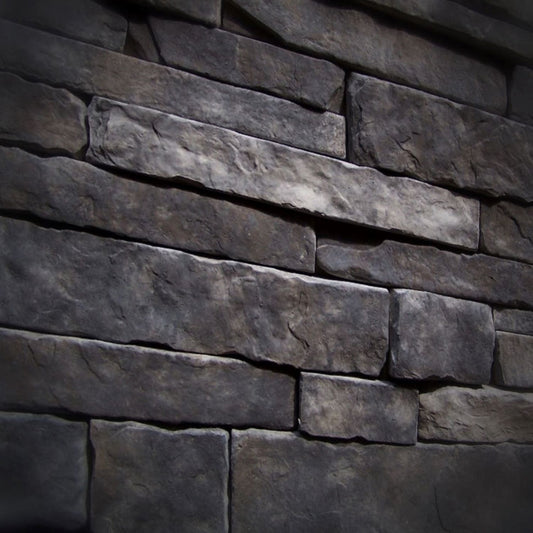
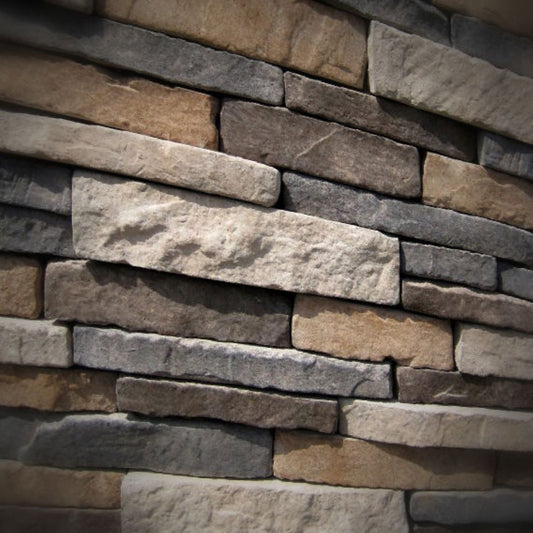
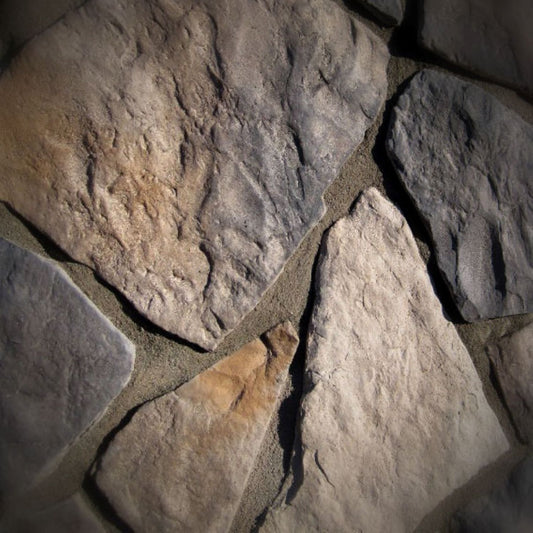
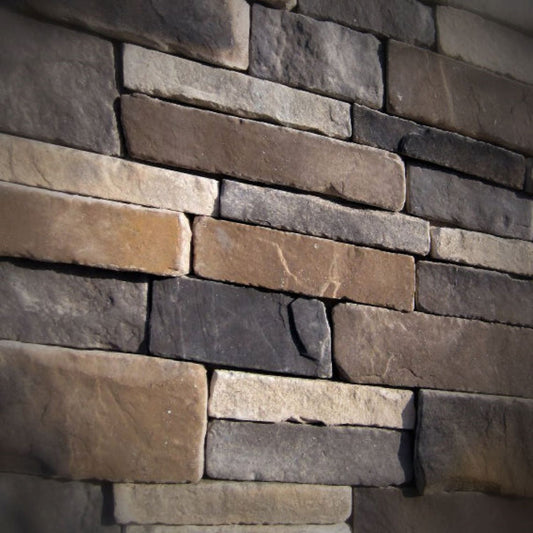
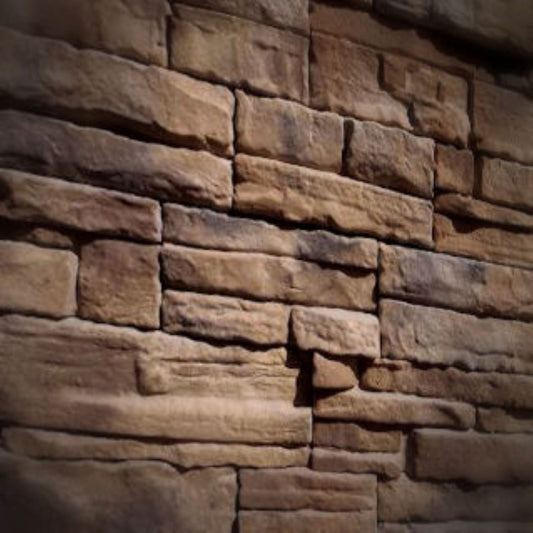
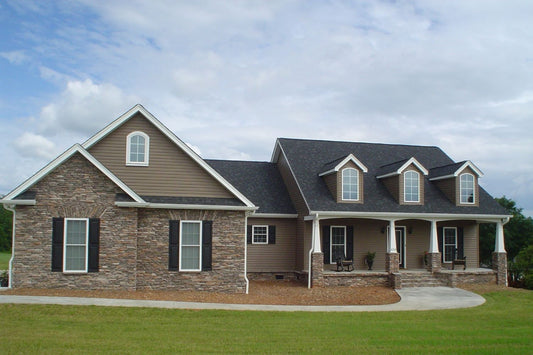
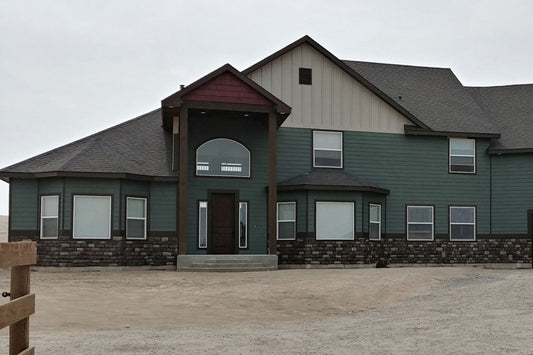
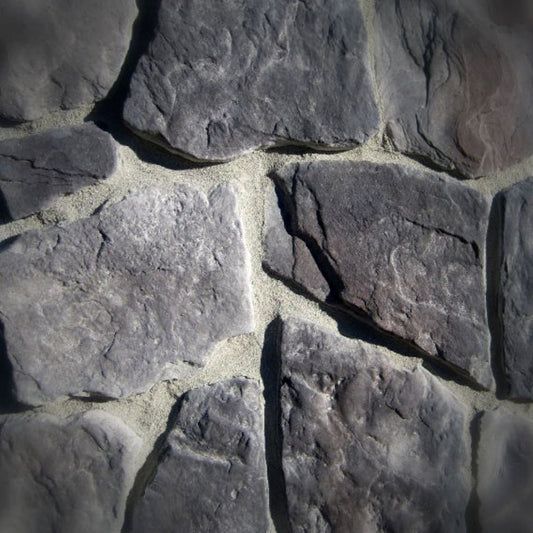
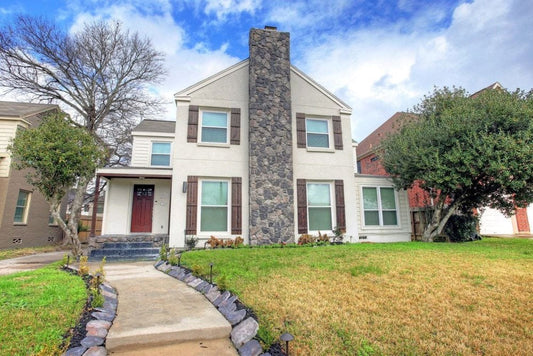
Pictured is field stone kona.



2 comments
Updated May 5th, 2025:
Hi Paula,
Thank you for your question and interest in our stone veneer.
The majority of our stone profiles are individual stone and they are made of Portland cement. The individual stones will vary in size, shape, and thickness. To achieve the desired natural stone finish as shown in our images it is up to the installer to arrange the individual stones in the correct pattern and install each stone one at a time. We call this out on our website in several places, but it can be missed. As stone veneer is made out of Portland cement, manufacturing it in sheets/panels is just not reasonable as the weight of the finished product would make it very difficult for the end user to install/work with, therefore the majority of manufactured stone veneer available in the market today will be individual stones.
If you are looking for a panel system, our ready stack profile is a mini panel stone product and is installed in sections at a time https://mountainviewstone.net/collections/ready-stack. Each panel measures 4” high but will vary in length (5.5”, 8.25”, 11”, 16.5”) and thickness (1.5”-2.5”). Each ready stack panel has multiple stones on each panel face. To achieve the desired finish as shown in our images it is up to the installer to arrange the panels in the correct pattern and install each panel one at a time.
The easiest way to determine the square footage of stone veneer flats you will need is to measure the length and to measure the height of the area you will be installing our stone veneer on and multiply them together to get the total square footage of stone veneer flats needed for your project.
Corners are not required but they offer a professional finish by wrapping perfectly around a 90 degree outside corner. If you decide to use corners you will need to calculate the lineal feet required by simply measuring the height of all outside corners as our corners are sold by the lineal foot. On each product page there are options for both flats and corners (to the right of the main product image). Outside corners are different from inside corners. For inside corners, our flats are used. Simply run a flat piece into the corner and then a flat piece on the adjacent side.
Please feel free to email us the dimensions of your project at info@blackbearmountainstone.com and we can help you estimate the number of corners and flats you will need to complete your project.
Important to note we always recommend adding 10% of what you think you will need as a waste factor.
Our stone veneer does not come with a top ledge piece; however, we offer this as an accessory. Please see https://blackbearmountainstone.com/products/sill.
Please feel free to email us at info@blackbearmountainstone.com and we can provide you a shipping quote for Alaska.
Please let us know if you have any more questions!
Hi wondering if this product comes in panels or just in stone and are these light weight or heavy and how easy are they to work with and what about corners and ledges to finish and do you work with any one in Alaska?