
Manufactured Stone Veneer Bathrooms
Share
Originally posted July 3 2025, updated September 21 2026.
Manufactured stone veneer can transform a bathroom with realistic texture, color, and depth. It can be used on bathroom accent walls, shower walls, vanity areas, and other architectural features when installed over an appropriate moisture-resistant or waterproofed substrate.
Bathrooms have evolved far beyond purely functional spaces. Today, homeowners are looking for ways to create comfortable, inviting rooms that feel more like private retreats. One way to bring warmth, texture, and architectural character into a bathroom is with manufactured stone veneer.
Manufactured stone veneer offers the appearance of natural stone while providing a versatile option for interior design. With a wide range of profiles, colors, textures, and shapes available, it can complement everything from contemporary spa-inspired bathrooms to rustic, traditional, and farmhouse designs.
From a dramatic shower feature wall to a textured wall behind a freestanding tub or vanity, bathroom stone veneer can become a defining element of the space. However, bathrooms require careful consideration of moisture, substrate preparation, waterproofing, installation, and maintenance. Understanding how manufactured stone veneer should be used in a bathroom is essential for creating a beautiful and long-lasting installation.
Why Use Manufactured Stone Veneer in a Bathroom?
Manufactured stone veneer can add visual depth that is difficult to achieve with painted drywall or other smooth wall finishes. The texture of individual stones creates natural variation, while the color and profile can help establish the overall character of the room.
Because manufactured stone veneer is made from a cement-based material with lightweight aggregates and mineral pigments, it can provide the look and feel of stone without the weight associated with many natural stone products. This makes it a practical design material for walls and architectural features where adding substantial weight may be undesirable.
Another advantage is design flexibility. Manufactured stone veneer is available in profiles ranging from tightly fitted stacked stone to more pronounced ledge-style patterns and other natural stone-inspired appearances. Colors can range from warm creams and browns to cool grays, charcoal tones, and darker shades, making it possible to coordinate the stone with tile, cabinetry, countertops, flooring, plumbing fixtures, and other bathroom finishes.
The result can be a bathroom that feels more substantial and architectural without requiring stone throughout the entire room.
Manufactured Stone Veneer Shower Walls
A stone veneer shower can create one of the most dramatic applications in a bathroom. Instead of using tile across every shower surface, manufactured stone veneer can introduce a highly textured focal point that gives the shower a more natural and spa-like appearance.
A feature wall on the back of the shower is one particularly effective approach. The stone can provide a strong visual backdrop while glass shower doors or other smooth surfaces create contrast. This combination allows the texture of the stone to stand out without making the entire room feel visually heavy.
Manufactured stone veneer can also be incorporated into portions of a shower design, such as an accent area or carefully planned architectural feature. Combining stone with large-format tile can create an interesting balance between organic texture and contemporary surfaces.
However, a shower is a particularly moisture-intensive environment, so installation requires more planning than a typical bathroom accent wall.
Waterproofing Considerations for Bathroom Stone Veneer
Manufactured stone veneer is not waterproof. The veneer should not be treated as a waterproof barrier, and simply applying sealer to the surface does not replace a properly designed waterproofing system.
This distinction is especially important for shower installations. Water management should be addressed behind the veneer with an appropriate waterproofing system designed for the specific application. The substrate, waterproofing membrane, drainage, transitions, penetrations, and other components must be properly planned before the stone veneer is installed.
A penetrating, breathable sealer may provide additional protection against moisture absorption, staining, and everyday bathroom exposure, depending on the product and application. However, sealing is a supplemental protective measure rather than a substitute for waterproofing.
For this reason, shower installations should be approached differently from decorative bathroom walls. If you are installing manufactured stone veneer in a shower, work with an experienced contractor or installer who understands both waterproofing and manufactured stone veneer installation.
Bathroom Stone Veneer Accent Walls
You do not need to cover an entire bathroom in stone to make an impact. A manufactured stone veneer accent wall can provide a focal point while allowing the rest of the room to remain relatively simple.
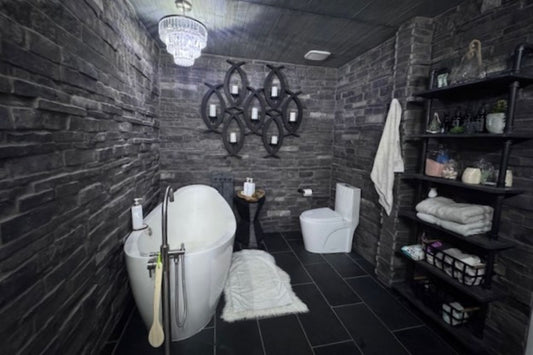
A wall behind a freestanding bathtub is an especially effective location. The combination of a sculptural tub and textured stone can create a relaxing, spa-inspired centerpiece. Depending on the profile and color, the same concept can also work in rustic, traditional, transitional, or modern bathrooms.
A stone veneer wall behind a vanity can create another strong focal point. The natural variation of the stone provides contrast against smooth cabinetry, mirrors, countertops, and metal fixtures. Lighter stone colors can help maintain an airy appearance, while darker gray, charcoal, or black tones can create a more dramatic atmosphere.
Using stone selectively can also help prevent the bathroom from becoming visually overwhelming. A single feature wall or architectural section may provide all the texture needed to transform the room.
Manufactured Stone Veneer Behind a Bathroom Vanity
The vanity area is another opportunity to incorporate manufactured stone veneer into a bathroom design. Rather than using a conventional smooth backsplash, stone veneer can extend upward behind the vanity to create a textured architectural backdrop.
This application works particularly well when the stone complements the bathroom's other materials. For example, warm-toned stone can coordinate with wood cabinetry and natural finishes, while gray or darker stone can work well with contemporary cabinets, white countertops, and modern fixtures.
Because manufactured stone veneer has substantial texture, it can also provide contrast in bathrooms dominated by smooth surfaces. Mirrors, glass, polished countertops, and ceramic fixtures can all help balance the more tactile appearance of the stone.
Choosing the Right Stone Veneer Profile for a Bathroom
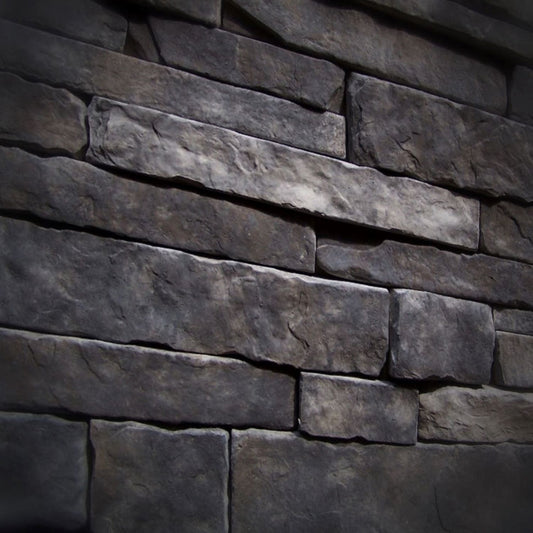
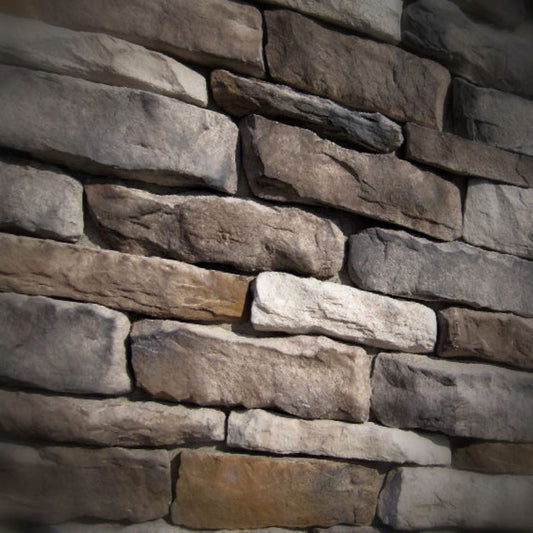
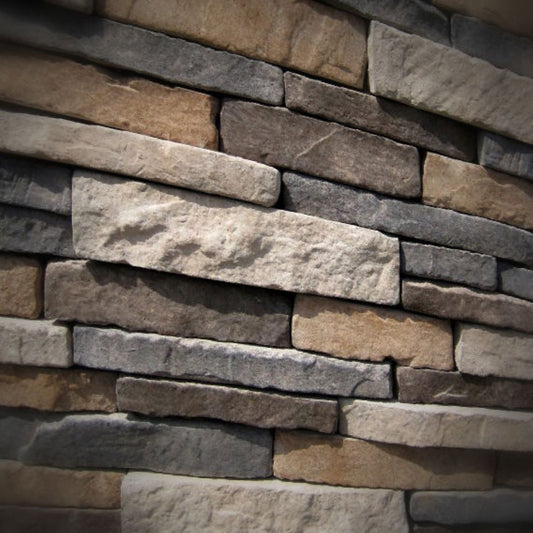
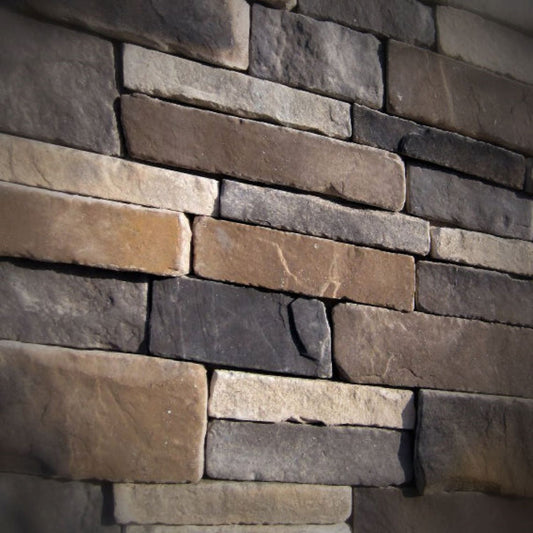
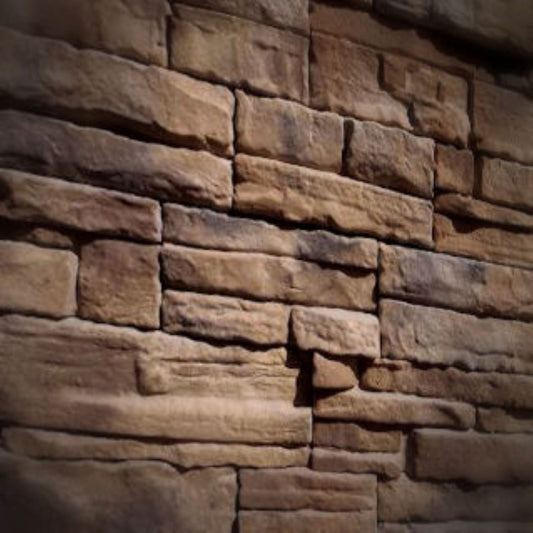
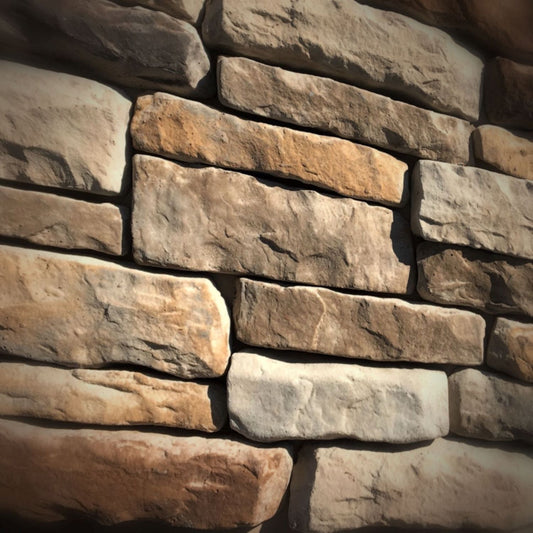
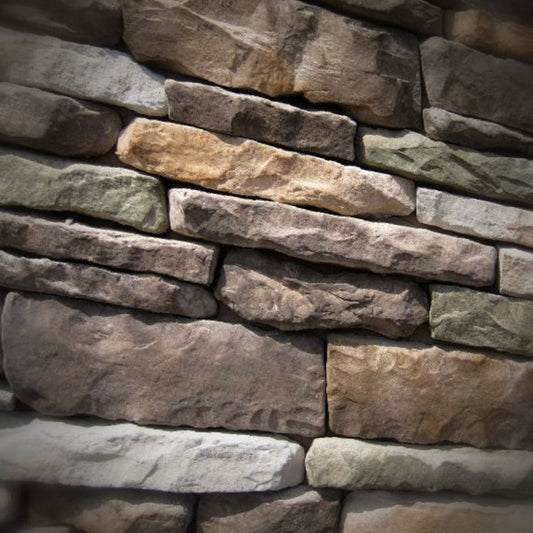
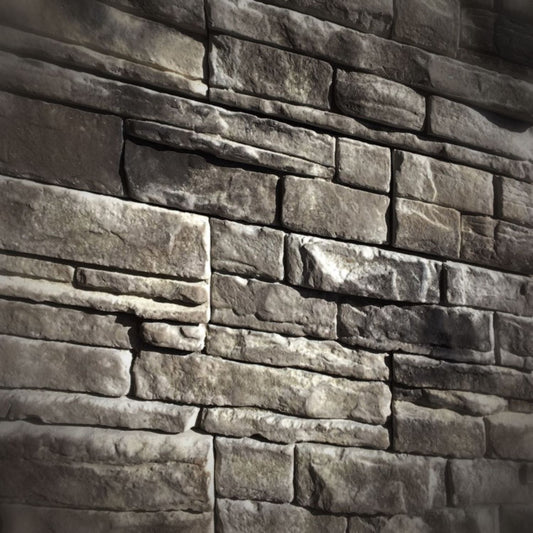
The profile you choose can have a significant effect on the overall appearance of the bathroom. Stacked stone consists of tightly fitted individual stones with minimal or narrow mortar joints, creating a dry-stack appearance with variation in individual stone faces, sizes, shapes, and colors.
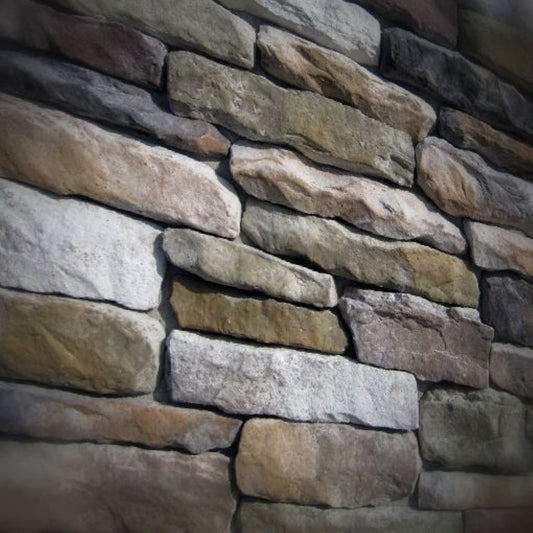
Ledgestone has a different character. Its stones tend to be longer and thinner, creating pronounced horizontal coursing and visible horizontal lines. This can emphasize the width of a wall and create a distinctly different visual effect from stacked stone.
Choosing between profiles ultimately comes down to the architectural character you want to create. The profile should complement the room's scale, existing materials, and overall design rather than simply being selected based on color alone.
Choosing Manufactured Stone Veneer Colors for Bathrooms
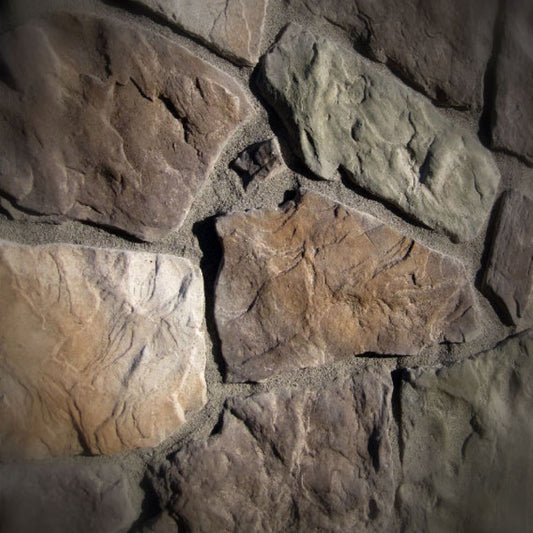
Color is equally important. Neutral manufactured stone veneer colors can create a soft, calming backdrop that works particularly well in spa-inspired bathrooms. Warm creams, tans, and earthy browns can introduce a natural and welcoming feel, while gray and charcoal tones can create a cooler contemporary appearance.
Before choosing a color or profile, consider the bathroom as a whole. Tile, cabinetry, countertops, flooring, lighting, mirrors, and fixtures should all work together rather than competing for attention.
Ordering a physical sample is one of the best ways to evaluate a stone veneer color and texture before committing to a larger installation. Lighting can significantly affect how a stone appears, and the texture of an actual sample is difficult to judge from a screen alone.
Installing Manufactured Stone Veneer in a Bathroom
Proper installation is critical in any bathroom application, and moisture-sensitive areas require particular attention to the substrate and installation system.
For moisture-sensitive substrates such as wood framing, plywood, OSB, drywall, or similar construction, the appropriate moisture-management system and substrate preparation should be completed before the veneer is installed. Shower applications require a properly designed waterproofing system suitable for continuous water exposure.
Manufactured stone veneer should be installed using the appropriate mortar system for the application. Type S mortar is preferred for manufactured stone veneer installations, construction adhesive or glue should not be used as a substitute for the recommended mortar installation.
The installation should also account for corners, transitions, penetrations, and other areas where water or movement could create problems. Following the manufacturer's installation requirements is essential for protecting both the finished appearance and the long-term performance of the installation.
Caring for Manufactured Stone Veneer in a Bathroom
Proper care helps preserve the appearance of manufactured stone veneer over time. Bathroom stone veneer should generally be cleaned with appropriate mild cleaning methods rather than harsh chemicals or abrasive tools that could damage the surface or affect its appearance.
Because bathroom environments can expose the veneer to moisture, soap residue, and other contaminants, regular light cleaning is preferable to allowing buildup to accumulate. Always use cleaning products that are appropriate for manufactured stone veneer and follow the manufacturer's recommendations.
A compatible breathable, non-glossy penetrating sealer may also be appropriate for some applications. Sealing requirements depend on the location and product, so the sealer should be tested in an inconspicuous area before broad application.
Most importantly, remember that sealing does not make manufactured stone veneer waterproof. The waterproofing system behind the veneer remains particularly important in shower applications.
Frequently Asked Questions About Manufactured Stone Veneer Bathrooms
Can manufactured stone veneer be used in a bathroom?
Yes. Manufactured stone veneer can be used on bathroom walls and architectural features when the substrate and installation system are appropriate for the location. Moisture-intensive areas such as showers require additional waterproofing considerations.
Can manufactured stone veneer be used in a shower?
Manufactured stone veneer can be used in shower applications when the installation is properly designed for continuous moisture exposure. The shower must have an appropriate waterproofing system behind the veneer, and the installation should follow the manufacturer's requirements.
Does manufactured stone veneer need to be sealed in a bathroom?
Sealing may provide additional protection against moisture absorption and staining, depending on the application and product. However, sealer does not make manufactured stone veneer waterproof and should never replace proper waterproofing behind a shower installation.
Can manufactured stone veneer be installed behind a bathroom vanity?
Yes. A manufactured stone veneer wall behind a vanity can create a strong focal point and provide contrast against smooth cabinetry, countertops, mirrors, and fixtures. The substrate and installation should still be appropriate for the bathroom environment.
How do you clean manufactured stone veneer in a bathroom?
Use gentle cleaning methods and products compatible with manufactured stone veneer. Avoid harsh chemicals and abrasive tools that could damage the surface. Regular cleaning helps prevent buildup from moisture, soap, and other bathroom contaminants.
Manufactured Stone Veneer Bathrooms
Manufactured stone veneer can be an effective way to introduce natural-looking texture, warmth, and architectural character into a bathroom. It can create a dramatic shower feature wall, add depth behind a bathtub or vanity, or provide a subtle accent that complements tile and other finishes.
The key is using the material appropriately. Decorative bathroom walls and high-moisture shower areas have different requirements, and shower installations should include a properly designed waterproofing system rather than relying on the veneer or sealer to keep water out.
With the right profile, color, substrate preparation, waterproofing, mortar installation, and ongoing care, manufactured stone veneer can become a distinctive part of a bathroom design while maintaining the realistic appearance and texture that make stone such a popular architectural finish.
What's Next?
Elevate your space with premium manufactured stone veneer. Shop now to start your project and bring your design vision to life with confidence and timeless style or order a sample to feel the authentic texture and vibrant colors.
Have a Question?
Please see our full terms of service or check out our frequently asked questions.
For general information and questions please call: (864) 882-8960 Mon. - Fri. 8am - 5pm (EST) or email: info@blackbearmountainstone.com we are more than happy to help you.
Or you can submit your questions via our contact us page.
We look forward to working with you on your upcoming project.
The Black Bear Mountain Stone Team
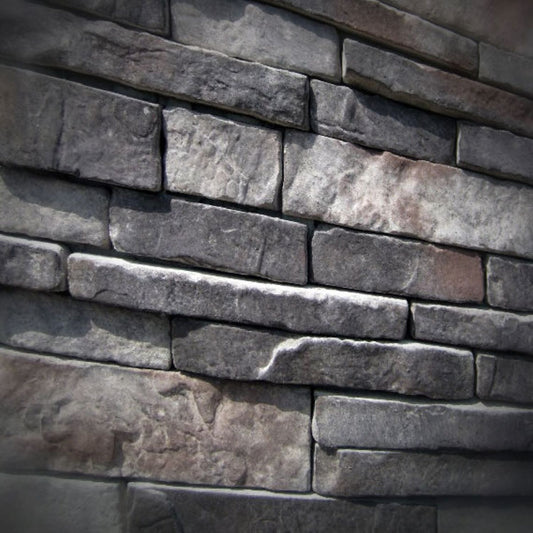
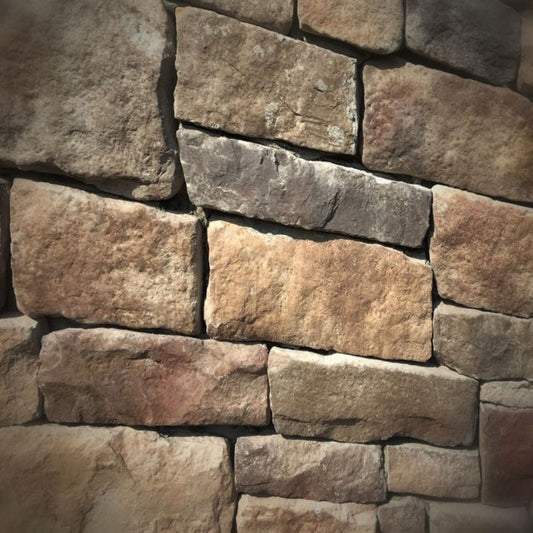
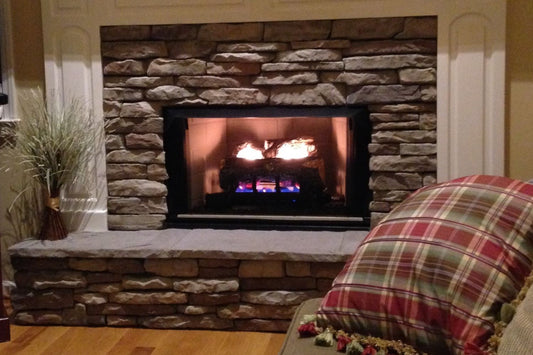
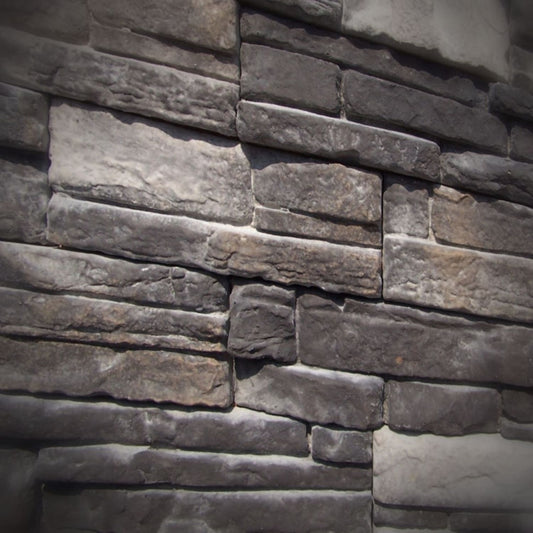
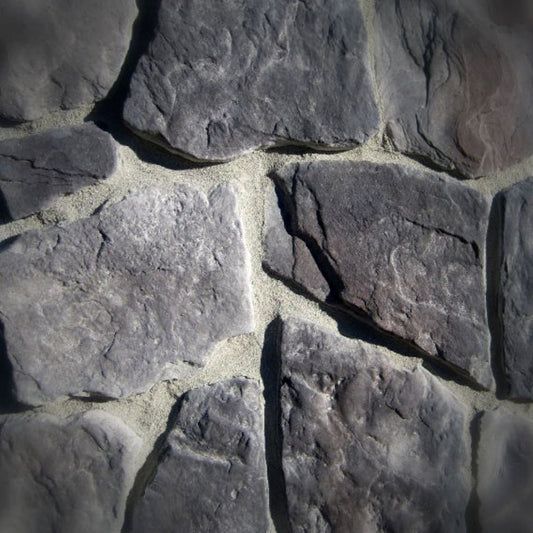
Pictured is stack stone black forest.